Get Full Government Meeting Transcripts, Videos, & Alerts Forever!
Get email alerts on the Dignitary Security topic
No spam. Unsubscribe anytime.
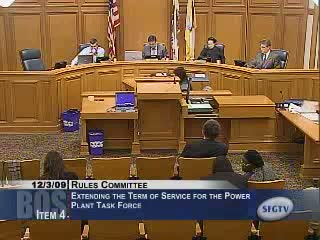
Rules Committee advances ordinance to require reporting and possible cost recovery for dignitary security on campaign travel, with amendments
Summary
After extensive debate with SFPD and public commenters, the Rules Committee asked the City Attorney to draft amendments (45-day deadlines, a de minimis exception and a Comptroller-certified flat rate) and forwarded the dignitary-security ordinance to the full Board by a 2–1 roll-call vote.
The Rules Committee on Dec. 3 advanced an ordinance that would require elected officials who receive city-provided dignitary security while traveling for campaign-related activities to report those trips and reimburse the city proportionally for any security costs attributed to campaign time. The committee directed the City Attorney to prepare amendments — including a de minimis exception and a flat-rate billing method — and voted 2–1 to forward the item to the full Board.
Sponsor Supervisor Ross McCarimi said the measure is intended to increase transparency about the San Francisco Police Department’s deployment of dignitary security and to recover costs when tax-funded security supports campaign-related travel. "We very much appreciate the San Francisco Police Department’s... role," the sponsor said, but added that because resource deployment is not currently itemized in the budget, the committee is making "a best guess estimate" that dignitary-security costs may be "approximately ... a million dollars a year." The sponsor said the ordinance is about cost recovery and better procedures, not about preventing security where it is needed.
Deputy City Attorney John Givner explained the draft mechanics: an official who receives security while traveling would file a schedule on return showing how much time was spent on campaign versus governmental activity; the providing department would bill total security costs; the official would reimburse the share attributable to campaign time (for example, 40% if 2 of 5 hours were campaign-related). Under the draft, the schedule/billing/payment process uses 15-day deadlines for each step.
Assistant Chief Jim Lynch, speaking on behalf of Chief Gascon, said the SFPD opposes the ordinance as drafted on policy and administrative grounds. Lynch warned that disclosing detailed deployment or personnel counts "could have a significant negative impact upon the ability of the department to protect these individuals or institutions," and that itemized billing by individual could expose threat details, raise privacy concerns and complicate tactical planning. The department proposed alternatives, including reporting aggregated global costs and adopting a Comptroller-certified flat rate to avoid disclosing tactical deployment details.
Committee members and public commenters debated scope and practicality. Supervisors asked whether the ordinance would apply to short in-state trips (for example, to San Jose) and to situations where an official attends a high-profile event that raises both security and political concerns. Several supervisors expressed concern about the 15-day deadlines and about potential penalties; sponsor and SFPD discussed extending the administrative timeline. Public speakers urged transparency but also recommended closed-session review when disclosure would undermine security.
In response to the department’s concerns and public comment, the sponsor proposed amendments: lengthen the administrative timelines from 15 to 45 days, add a de minimis exception (committee discussion suggested $500 as a candidate threshold), and direct the City Attorney to work with the Controller and SFPD to develop a flat-rate billing approach. Supervisor Chris Daley moved to request those amendments and forward the item to the full Board. Roll call: Daley — aye; Supervisor Alioto Pier — no; Chair Campos — aye. The motion passed 2–1 and the item will be scheduled before the full Board.
Next steps: the City Attorney will prepare the proposed amendments (de minimis exception, flat-rate methodology) for the Board’s consideration; SFPD indicated willingness to work with the sponsor on administrative adjustments to protect operational security.