Get Full Government Meeting Transcripts, Videos, & Alerts Forever!
Get email alerts on the Shelter Policy topic
No spam. Unsubscribe anytime.
Rules Committee hears sharp criticism of shelter reservation system; advocates push for longer stays and software fixes
Summary
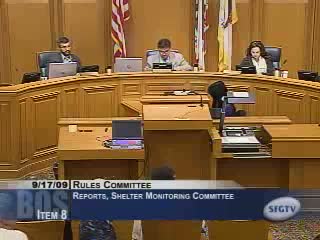
At a Rules Committee hearing Sept. 17, advocates, shelter monitors and dozens of clients described long waits, frequent "dropped" reservations and one‑night placements under a revised shelter reservation policy. The Human Services Agency outlined steps and short‑term bed expansions while promising continued review.
The Board of Supervisors Rules Committee heard more than two hours of testimony on Sept. 17 about complaints that San Francisco’s shelter reservation and extension policy is producing long waits and unstable placements for people seeking emergency beds.
"We have a shelter reservation system that is confusing, complicated, constantly changing," said Jennifer Friedenbach, executive director of the Coalition on Homelessness, which issued a report called the "Runaround" after interviews with people trying to access shelter. The coalition’s review found median waits dropped from roughly seven days to eight hours after a July policy change but also reported widespread problems including reservations that no longer appeared in the system when people arrived at a shelter.
Why it matters: advocates, shelter monitors and some shelter directors said the July changes — which standardized shorter initial stays and relied on the city's "Changes" reservation software to manage assignments — exposed two linked risks: (1) a brittle computer workflow that sometimes drops reservations or misroutes beds, and (2) a narrower definition of guaranteed stay that forces people to re‑queue frequently instead of stabilizing with case management. The coalition told the committee that in one survey after July 1, 39 percent of respondents reported a dropped reservation and 42 percent of people who received a bed were placed for a single night only.
Shelter monitors reported site findings and complaints. "In the last three quarters the committee conducted 59 site inspections," said Henry Belton, chair of the Shelter Monitoring Committee, who also flagged recurring problems with nutrition, hygiene supplies and slow complaint responses. The committee told the supervisors that the average acknowledgment time for standard‑of‑care complaints exceeded the ordinance's two‑day target; the report cited average acknowledgment and response times measured in weeks.
The Department of Public Health, which investigates health and hygiene referrals from the shelter monitor committee, also acknowledged lags. David Nakanishi, a DPH representative, told the committee most forwarded investigations were completed but that formal reports were delayed; in the quarterly data DPH cited investigation turnaround times ranging up to 147 days for some cases.
Public testimony included detailed first‑hand accounts from shelter seekers and client advocates about lost belongings, medication theft, and people with disabilities being assigned top bunks or turned away. "I lost my bed while I was still sleeping in it," said one witness who described waiting hours at multiple sites to regain a placement. Shelter staff and some program directors urged the committee to preserve case management flexibility and warned that very short guaranteed stays can undermine efforts to place residents into housing. Dolores Street Community Services reported more housing placements when clients had multi‑month stays.
Human Services Agency response: Joyce Crum, HSA’s director of the Housing and Homeless Division, acknowledged the system is "not perfect" and described steps the agency says it has taken since July. Crum said HSA has trained shelter supervisors on new procedures, implemented workarounds while fixes are developed for the Changes software, and planned modest capacity increases this year: roughly 46 additional beds and 23 bunks plus an opening at 150 Otis that could house about 59 people. She also described Interfaith winter‑shelter arrangements capable of hosting additional people in rotation.
Committee and next steps: Supervisors asked for better data and promised follow‑up. Supervisor Chris Daly urged the department to supply numbers on how many beds become vacant each night, how many are designated Care Not Cash beds, and a breakdown of one‑night placements. Chair David Campos said he would place further review of DPH follow‑up and the grievance process on a future agenda. Several supervisors and advocates called for a systematic way to track turnaways and for the city to consider a longer initial guaranteed stay to reduce the daily burden on people seeking shelter.
The committee continued the matter for additional follow‑up with HSA and DPH. Supervisors asked the agencies to return with specific data — including counts of one‑night placements, the portion of beds designated for Care Not Cash recipients and vacancy reporting — and to report back on software fixes and grievance‑process changes.