Get Full Government Meeting Transcripts, Videos, & Alerts Forever!
Get email alerts on the Housing Policy topic
No spam. Unsubscribe anytime.
Supervisors weigh tenant‑harassment ballot language as public pressure mounts over landlord practices
Summary
The Rules Committee accepted an amendment to send a tenant‑harassment measure to the ballot for voter consideration after lengthy public testimony from tenants and landlord groups; supporters say the change fills enforcement gaps, while small owners say the language is vague and could chill ordinary landlord–tenant interactions.
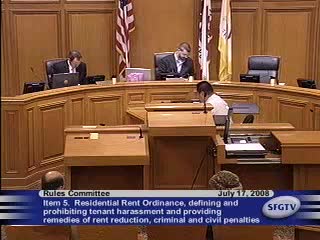
The Rules Committee advanced consideration of a proposed ballot measure defining and prohibiting tenant harassment and directed staff to calendar further discussion after receiving extensive public comment. The clerk read Item 5, an ordinance to amend the Rent Stabilization and Arbitration Ordinance to expand definitions of harassment and provide penalties and remedies; the sponsor introduced an amendment of the whole and asked the committee to place the question before voters.
Tenant advocates and community organizers urged supervisors to let voters decide. Speakers described patterns they said were common in certain portfolios — repeated buyout offers, uncashed rent checks, persistent loud/noise construction, surveillance, intimidation and threats of reporting tenants to immigration authorities — and argued the rent board lacks a clear, accessible remedy. “Harassment is currently what is undermining rent control right now, and we need the rent board to be able to take that under their purview,” said a City Stop Coalition organizer.
Representatives of small property‑owner groups and landlord associations opposed the measure as written. They argued much of the conduct described is already illegal, that the draft language was vague and could chill normal owner‑occupant conversations, and warned the measure could increase litigation or remove small landlords from the rental market. The Small Property Owners Institute said many of its members live with tenants in owner‑occupied duplexes and expressed concern that well‑intentioned conversations could be subject to complaint.
Committee members accepted the amendment of the whole for further review and agreed to schedule a follow‑up committee hearing to refine language and consider exemptions or procedural safeguards. The sponsor and staff will work to identify a calendaring date so the item can meet the board’s timeline for potential placement on the November ballot.