Get Full Government Meeting Transcripts, Videos, & Alerts Forever!
Get email alerts on the Budget Policy topic
No spam. Unsubscribe anytime.
Mayor’s set‑aside charter amendment prompts debate over future ballot budgeting and trade‑offs
Summary
A mayoral proposal to require funding sources for new multiyear ballot set‑asides and to cap growth and sunset set‑asides drew sustained questioning from supervisors over potential conflicts with other mayoral ballot items and whether the measure meaningfully changes existing law; the mayor’s liaison urged the measure as a long‑term reform after a large deficit.
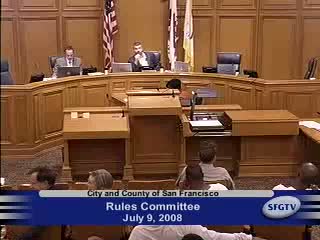
The Rules Committee heard a presentation and questions on the mayor’s proposal to send to voters either a charter amendment or ballot ordinance (Items 9 and 10) that would require new multiyear ballot set‑asides to identify a new funding source, limit annual growth to 2% and sunset the set‑aside within 10 years. The proposal would also expand the Controller’s statement to require analysis of tradeoffs and how a set‑aside affects other budget priorities.
Mr. Berry, the mayor’s liaison to the Board, said the measures are driven by the city’s budget deficit and a desire to impose discipline on future ballot set‑asides, not to undo past voter decisions. Supervisors pressed on whether the mayor’s other ballot proposals (including a Community Justice Center funding request) created contradictions; Berry said the Community Justice Center request is for a one‑year appropriation to retain federal funds and is not a multiyear set‑aside in perpetuity.
The committee also debated whether the charter amendment would be prospective only, whether it would affect minimum staffing or other non‑set‑aside mandatory expenditures, and whether the measure is primarily a policy statement or would have legal force to bind future boards. Several supervisors suggested the measure could be broadened or combined with other reforms to give voters a clear, substantive choice about whether to roll back existing set‑asides or simply limit future ones. The chair requested additional information from the mayor’s office on the mayor’s prior record supporting or opposing set‑asides.
The matter remains before the committee for follow‑up; supervisors requested clarifying answers from the mayor’s office and legal counsel about scope and enforceability before forwarding or recommending the measure.