Get Full Government Meeting Transcripts, Videos, & Alerts Forever!
Get email alerts on the Police Commission Appointment topic
No spam. Unsubscribe anytime.
Board committee recommends David Onik for Police Commission after questioning on independence and technology
Summary
The Rules Committee heard testimony and broad public support for David Onik’s nomination to the San Francisco Police Commission. Supervisors pressed Onik on independence from appointing authorities, SFPD technology gaps and foot‑patrol implementation; the committee recommended his confirmation to the full board.
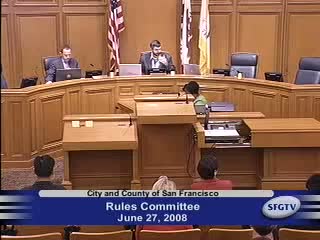
David Onik, the founding executive director of the Berkeley Center for Criminal Justice, was recommended by the Board of Supervisors Rules Committee for confirmation to the San Francisco Police Commission after a confirmation hearing on June 27.
Onik told supervisors he would serve independently from appointing authorities and use his experience in city government and criminal justice research to set broad policy outlines for the commission. "I certainly plan to be an independent commissioner, and use my best judgment," he said, summarizing his approach to both policy matters and individual discipline issues that the commission reviews.
Supervisors pressed Onik on several operational issues. Supervisor Dufty asked how Onik would maintain autonomy after working in the mayor’s Office of Criminal Justice and probed the Police Department’s technology shortcomings, citing a Gartner report and the hiring and departure of an earlier civilian technology officer. Onik acknowledged gaps in the department’s data and technology capabilities and said he would get up to speed and seek to help address them if confirmed.
Committee members also questioned Onik about foot‑patrol rollout and measurement. Dufty said outside reviews and hearings had shown uneven implementation and limited data collection; Onik said he supported foot patrols as a community‑policing tool while noting resource and staffing tradeoffs.
Public comment at the hearing was strongly supportive. More than a dozen community leaders, nonprofit directors and public‑safety officials — including Gina Castro Rodriguez of the Youth Justice Institute, organizers who’ve worked with youth, neighborhood public‑safety activists and probation department leaders — praised Onik’s record on juvenile justice, violence‑reduction partnerships and community engagement.
Claire Murphy, acting actuary for the city retirement system, did not speak to this item but appeared later in the hearing on a separate charter amendment.
Following questions and the public‑comment period, Supervisor Doctor moved to forward Onik’s nomination with the committee’s recommendation to the full board; the motion passed without objection.
The full Board of Supervisors will consider confirmation at a later date.