Get Full Government Meeting Transcripts, Videos, & Alerts Forever!
Get email alerts on the Arts Funding topic
No spam. Unsubscribe anytime.
Supervisors Hear Report Showing Arts Funding Rise; Community Groups Urge Protecting Hotel‑Tax Support
Summary
A Rules Committee hearing reviewed three years of arts funding data showing about an $10.3 million (≈18%) increase driven largely by hotel‑tax revenues; arts leaders urged preserving dedicated hotel‑tax support and cited capital and neighborhood program needs. Committee filed the matter and requested a follow‑up hearing.
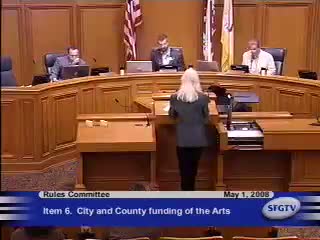
The San Francisco Board of Supervisors Rules Committee heard a three‑year review of city arts funding and public testimony from dozens of cultural organizations on the scope and priorities of local arts support.
Budget Analyst Deborah Newman told the committee that funding for the arts rose by roughly $10.3 million — about an 18 percent increase — climbing from about $57.5 million to roughly $67.8 million over the three‑year window. Newman attributed most of the growth to higher hotel‑tax receipts and some additional general‑fund support, and noted the city’s annual appropriation ordinance (AAO) has been used to reallocate hotel‑tax revenues each year.
"The hotel tax is currently 14%," Newman said, and annual administrative appropriations have shifted how much of that tourist revenue is directed to arts programs versus discretionary general‑fund uses. She recommended that if the annual reallocation practice continues, the city should amend the business and tax regulation code to match ongoing practice.
Director of Cultural Affairs (introduced at the hearing) urged the board to preserve a predictable funding stream for the cultural sector, saying the hotel‑tax dedication helps sustain neighborhood cultural centers and cultural equity programs. The director said the Arts Commission aims to prioritize bringing smaller organizations up to funding goals and to preserve grant programs that support individual artists and community‑based work.
Speakers representing a broad cross section of arts groups described programs that rely on steady funding. The Bayview Opera House was cited as receiving roughly $5 million in planned capital renovations over two years, though speakers said about $1 million remained to be raised for equipment and completion. The San Francisco Symphony highlighted long‑running in‑school music education programs; smaller groups described grants that help emerging artists, neighborhood festivals, and partnerships with social‑service providers.
"We are trying to spread that money around to reach as deeply as we can within the cultural community of San Francisco," the arts director said, describing average grant sizes and the city’s emphasis on cultural equity.
Several speakers also urged that hotel‑tax allocations be protected from diversion. "The allocations being diverted away from arts and low‑income housing is the difference between a real substantial neighborhood arts program and not having one," said a task force advocate representing neighborhood arts interests.
After public comment, Supervisor Tom Ammiano moved to file the matter and to request a dedicated hearing on the Arts Task Force recommendations; the committee accepted the motion "without objection" and will schedule a follow‑up hearing to examine priorities, budget mechanics and mayoral budget proposals.
Next steps: the Budget Analyst will provide requested written detail on hotel‑tax forecasts and the mayor’s proposed allocations, and the Board will hold the follow‑up hearing requested by the committee.