Get Full Government Meeting Transcripts, Videos, & Alerts Forever!
Get email alerts on the Slavery Disclosure Ordinance topic
No spam. Unsubscribe anytime.
San Francisco committee reviews slavery‑era disclosure report, public urges broader scope and a voluntary reparations fund
Summary
City staff presented the 2006 Slavery Era Disclosure Ordinance report and recommended continuing affidavits and seeking voluntary corporate contributions. Community speakers and supervisors urged expanding the ordinance beyond textiles and insurance, strengthening outreach and pursuing an educational fund.
City staff presented the first report required under San Francisco’s Slavery Era Disclosure Ordinance, outlining three administrative mandates and urging continued work on voluntary corporate disclosures and a donations fund.
The report, introduced to the Rules Committee by an unidentified presenter, summarized the ordinance’s three elements: requiring affidavits from companies with historical ties to slavery (including some banks, finance and textile firms), establishing a voluntary fund through the comptroller’s office for donations, and producing ongoing research and reporting back to the Board. The presenter named participating offices and student researchers and recommended continuing the affidavit process and sending letters to financial institutions to solicit voluntary cooperation.
Why it matters: Supporters said the measure advances local accountability and education about slavery’s economic legacy and creates an avenue for voluntary reparative contributions. ‘‘We recommend that we continue that effort and that we will also . . . issue a letter to the various financial institutions for them to voluntarily cooperate,’’ the presenter said.
Community leaders and residents delivered widespread public comment supporting the report but asking for stronger implementation. Al Williams of the Historical Society and others urged the Board to expand the ordinance’s reach beyond insurance and textiles and to press more proactively for business contributions to the voluntary fund. John Damou said the ordinance ‘‘only covers insurance companies and textiles’’ and asked the Board to broaden the mandate because corporate mergers can create indirect ties to slavery.
Academics and students also spoke: James Taylor, a University of San Francisco politics professor who participated in the task force, urged follow‑through so the ordinance’s commitments do not lapse. Fanny Wiley Preston, former dean of the School of Education at Saint Mary’s College, said the proposed fund should be used to address documented achievement gaps for African American and Hispanic students.
Staff and supervisors said the next year would focus on soliciting funds and tracking existing corporate scholarship efforts. In response to Supervisor Ellsberg’s question about Oakland’s comparable fund, staff said Oakland’s fund did not have money and that San Francisco would begin outreach to corporations that had announced scholarship donations in 2005–06. Supervisor comments emphasized transparency for any future fund and called for clearer guidance about how donated dollars would be used.
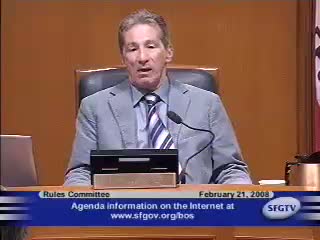
The committee took no formal action; Chair Amiano described the session as a hearing on the report and noted that no vote was taken.
What’s next: Staff indicated 2006–2007 would be the focus for pursuing donations and continuing research; community speakers asked the Board to return with firmer language on implementation and a plan for education and outreach.