Get Full Government Meeting Transcripts, Videos, & Alerts Forever!
Get email alerts on the Taxi Healthcare topic
No spam. Unsubscribe anytime.
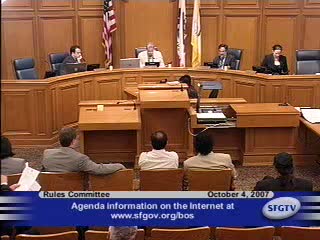
Rules Committee hears competing plans to fund taxi-driver health care; hearings to continue
Summary
San Francisco Rules Committee opened a multi-session review of a taxi driver health-care plan. A Taxi Commission working group recommended a mixed funding model with driver, company, medallion-holder and city contributions; medallion owners and some drivers filed minority proposals and asked for more data. The item was continued for further study.
At a Rules Committee hearing, the Taxi Commission working group presented a proposed health-care plan for taxi drivers that would combine contributions from drivers, medallion holders, taxi companies and the city and rely in part on modest meter and gate increases to help finance coverage.
Heidi Machin, staff to the Taxi Commission, outlined the group’s recommendations and its process of public meetings and stakeholder input. She said the group recommended eligibility thresholds “to establish initial eligibility by driving 1,000 during a year, and maintain coverage by driving 800 hours per year,” and preferred mandatory participation to avoid adverse selection. On funding, Machin described the recommended split: drivers would pay an initial 10% contribution and participating drivers an additional 20% (30% total), medallion holders and taxi companies 25% each, and the city would contribute 20%. The working group also proposed rider-facing offsets including a flag-drop and per-mile/midpoint adjustments; the Commission later tweaked the rider proposal to lower the direct fare impact (for example, a $3 flag drop and 40¢ per 1/6-mile rate rather than a larger flag-drop).
Jean Fraser of the San Francisco Health Plan told the committee the health plan served as an "incubator for innovative ideas" and that staff had modeled cost and financing options with an actuary but was not necessarily the sole implementer. Fraser framed the policy choice as two core questions — “who should pay and who should get it” — and offered technical support and options for integrating drivers into city programs such as Healthy San Francisco.
Public comment was extensive and sharply divided. Union and driver advocates urged action to address high uninsured rates among drivers, describing the group as vulnerable and noting public-health risks found during screenings. Mark Gruberg, representing driver advocates, said the proposed structure could be run through a health-and-welfare trust and argued the $5-per-shift gate increase would be feasible for companies and would leave drivers better off relative to remaining uninsured. Several drivers described personal health barriers; one driver, Craig Nelson, said, "I make an excess of $250 a day," while others described chronic conditions and lack of access to preventive care.
Medallion holders and taxi-company representatives pressed a different view. Carl McMorrow and other company representatives called the working group's proposal "unrealistic," warned fares could rise sharply and cited a legal concern that an assessment on cab companies could amount to a special tax requiring a two-thirds ballot vote. Brian Brown and others submitted a minority report from within the working group proposing alternative rate and gate adjustments (for example, a larger meter increase combined with a smaller gate change) and urged the Board to consider that minority analysis. Some medallion holders and industry representatives asked for a study of actual driver incomes before adopting major funding changes.
The Controller’s Office ran short-notice calculations on several meter/gate scenarios and presented estimated net effects on driver pocket income under different trip-count assumptions; Machin summarized those figures for the committee, noting that different meter schemes produced different net outcomes for drivers on a 15- or 20-trip-per-shift basis.
Committee members pressed for more detail on coverage portability and the makeup of the driver population: Machin said about 60% of drivers live outside San Francisco and that approximately 50% of drivers lacked health coverage, but she said a finer geographic breakdown of uninsured drivers was "not specified" in the presentation. Supervisors also discussed whether portions of existing city payments for the uninsured would be redirected into a driver plan or if separate funding would be required.
The hearing produced no final vote. After extended public comment and discussion, Chair Supervisor Tom Ammiano thanked participants and continued the item to the call of the Chair, scheduling additional hearings and further technical analyses before any formal action by the full Board.