Get Full Government Meeting Transcripts, Videos, & Alerts Forever!
Get email alerts on the Fuel Markets topic
No spam. Unsubscribe anytime.
Supervisors probe refiners— role in high local gas prices and consider barring company-owned stations
Summary
At a Rules Committee hearing, Supervisor Tom Ammiano and independent station owners urged legislation to separate refiners from retail stations and restrict zone pricing, citing shrinking competition and large price spreads; industry representatives warned such rules can raise prices and cited CARB and taxes as factors.
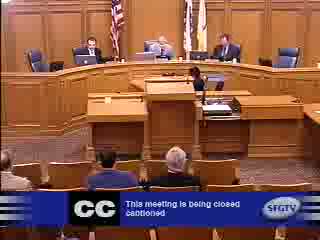
Supervisor Tom Ammiano convened a Rules Committee hearing on May 29 to examine whether the City and County of San Francisco should add administrative-code sections (listed in the agenda as 80.1 through 80.1) to require refiners to divest company-owned service stations and to bar discriminatory practices by refiners.
Ammiano framed the issue as urgent for consumers, saying fewer operators produce "a demonstrable lack of competition at the pump" and accusing refiners of "economic redlining" that leaves San Franciscans paying substantially more than the national average. He said the committee would continue to work with the city attorney on possible legislation to foster price competition at the pump.
Dennis Decot, executive director of the California Service Station and Automotive Repair Association, testified that retail franchisees now have little control over pump prices. Decot described "zone pricing" as a mechanism by which refiners set dealers— wholesale costs by geographic micro-zone and said companies stopped franchising new locations in the mid-1990s, increasing company control over retail pricing. He recommended a three-part legislative approach: divorcement (separating refinery ownership from retail outlets), limits on supply agreements, and shorter contract terms so dealers can compete.
"Zone pricing is where the major oil companies take and control the price of the dealer's wholesale cost of product in a given location," Decot said, and he testified that some brands now divide San Francisco into 12–14 price zones and that identical-brand stations sometimes show spreads of as much as 28¢ per gallon inside the city.
Local franchisee Corey Urban, who operates a Shell-branded station on Geary Boulevard, said Shell has converted many dealer locations into corporate-price stations. Urban gave specific examples: of the roughly 20 remaining Shell-branded stations in the city, he said nine are now corporate-price stations; his own station's monthly volume fell from about 150,000 gallons (circa 2002) to about 105,000 (2006), and his lease was increased by about $2,000 per month. Urban said he and 53 other California dealers filed a lawsuit in 2003 alleging company conduct harmed franchisees and that corporate pricing concentrates volume at company-owned outlets.
"Shell began to create microzones of wholesale pricing to their franchisees," Urban said. "They then posted retail prices at their corporate stations at levels our franchise dealers could not compete with."
Representing the petroleum industry perspective, Anita Mangels of the Western States Petroleum Association cautioned that state fuel regulations and taxes explain much of California's higher prices. She cited Auto Club data showing San Francisco prices about 4–5% higher over the past year and said the state—s cleaner gasoline (CARB mandates) and high per-gallon taxes contribute to the gap. Mangels also noted that divorcement laws in some jurisdictions have been associated with higher retail prices and said the Federal Trade Commission warned that some restrictions on supplier practices could impede competition.
Dan Bernal, from the Speaker of the House—s office, summarized federal efforts: the House recently passed measures including an Energy Price Gouging Prevention Act and an anti-price-fixing bill (HR 1252), and Congress is pursuing a broader energy package intended to address supply and market issues.
Committee members asked for more data and cross‑jurisdictional examples. Ammiano said the committee would continue to work with the city attorney on possible legislative options (including the three-pronged approach Decot described) and requested additional information, including examples from other cities and state-level experience.
No formal vote was taken on Item 1 at the hearing; the committee closed the public portion and signaled it will pursue further analysis with the city attorney.