Get Full Government Meeting Transcripts, Videos, & Alerts Forever!
Get email alerts on the Public Records topic
No spam. Unsubscribe anytime.
Rules Committee pauses decision on providing public records in Word after debate over metadata and legal duty
Summary
The committee continued a request from the Clerk of the Board for policy direction on whether to provide records in Word or PDF after technical, legal, and public-access concerns. The Clerk warned of pending requests that may require Word-format responses if the board does not act.
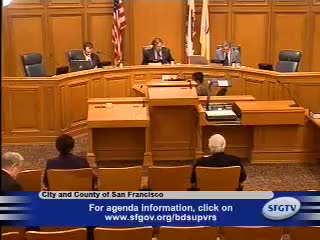
The Rules Committee on Wednesday continued discussion about whether the Clerk of the Board should provide public records in their native Word/Excel formats or only as PDFs, after a lengthy exchange among the clerk, IT staff, the City Attorney’s Office, the Sunshine Ordinance Task Force and members of the public.
Gloria Young, Clerk of the Board, said the office has provided documents in PDF since 2000 and sought policy direction because “we have several requests that are pending in our office to provide members of the public with documents in Word.” She said the office had been advised by the City Attorney to provide PDFs and cited server-security and metadata concerns as reasons to limit native-file release.
Rod Laux, chief technology officer for the Department of Telecommunications and Information Services, gave a technical explanation of metadata and extended data in Office files, saying “metadata is basically data that describes data” and that Word documents can include revision histories and macros that may reveal file locations or custody history. He said tools exist to strip metadata but that selective redaction can be technically complex.
Deputy City Attorney Miriam Morley told the committee the City Attorney’s Office concluded there is “a sound legal basis for continuing the board’s practice of providing its documents … in PDF rather than in Word format,” but emphasized the area is legally unsettled and that providing PDFs instead of native files remains a policy choice.
Members of the Sunshine Ordinance Task Force and public commenters pushed back. Doug Comstock, chair of the task force, argued that “metadata is part of the original document” and said free and commercial tools can remove exempt metadata; he cited Government Code section 6253.9 to say agencies generally must make records available in an electronic format in which they hold them when requested. Public speakers, including one of the complainants in earlier determinations, said limiting format access would impede public review, amendment, and investigative reporting.
Committee members said the question raises both practical burdens for staff and access-rights concerns. Supervisor Sean Ellsburn pressed staff on whether identifying and removing sensitive metadata is feasible for ordinary city employees; DTIS said certain tasks may require technical expertise and time. Several supervisors urged the Sunshine Ordinance Task Force to continue work on guidance and on system-wide cost and training implications.
After discussion, the committee voted to continue the matter to the call of the chair to give the clerk, the City Attorney’s Office and the Sunshine Ordinance Task Force time to reconcile legal, technical and practical issues. The Clerk warned that she has outstanding requests that, if unaddressed, could require production in Word by a stated statutory deadline (she said some requests must be provided in Word ‘‘no later than next Friday the tenth’’). The City Attorney’s Office said it would advise the Clerk on responding to any pending requests during the continuance.
The continuation leaves the legal and policy tension unresolved: the City Attorney’s Office recommended PDFs as a practical, lower-risk way to protect system integrity, while the Sunshine Task Force and multiple public speakers urged releasing original, editable files where legally required to preserve public access and usability. The committee asked the task force to report back with recommendations and additional analysis of staff burden and potential cost implications.