Get Full Government Meeting Transcripts, Videos, & Alerts Forever!
Get email alerts on the Cannabis Policy topic
No spam. Unsubscribe anytime.
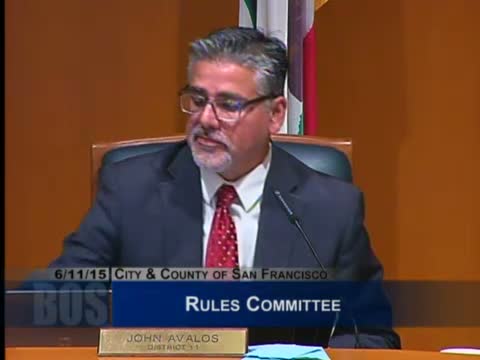
Rules Committee forwards ordinance to create Cannabis State Legalization Task Force
Summary
The Rules Committee unanimously forwarded an ordinance to create a 22‑member Cannabis State Legalization Task Force to advise city officials on local impacts of possible state legalization, adding cleanup amendments and asking departments and stakeholders to participate.
The San Francisco Board of Supervisors Rules Committee voted to forward an ordinance establishing a Cannabis State Legalization Task Force to the full Board with a positive recommendation.
Sponsor Supervisor Scott Wiener described the task force as a 22‑member stakeholder body that will bring together residents, businesses, advocates and city departments to identify legal, land‑use, regulatory and enforcement issues that San Francisco must plan for should the state adopt adult-use legalization. Wiener said the task force will not take a formal position on legalization but will focus on administrative and policy recommendations and expected to report back within one year.
Fiona Ma, a member of the State Board of Equalization who addressed the committee, said the BOE is preparing for administration and tax-collection duties and offered to share state-level analyses with the task force. "We are going to be the agency who is going to be collecting the tax, administering, auditing," Ma said, urging workable tax design and administrative rules.
Industry and neighborhood stakeholders urged the committee to address taxation, clustering of dispensaries, hospitality and visitor needs, product testing and social‑justice priorities. Terrence Allen, who has worked with nightlife and hospitality groups on cannabis issues, warned that Colorado’s experience showed the importance of planning for where and how people may use purchased product. Industry representatives also cautioned that excessive combined local and state taxes can sustain a black market.
Supervisor Wiener moved and the committee approved minor cleanup amendments (clarifying seat numbering and appointment authority for the youth seat) and forwarded the ordinance to the full Board with a positive recommendation. The ordinance as amended calls for a mix of non‑voting government advisors and voting stakeholder seats (including education, industry, neighborhood associations, health advocacy, hospitality, labor and a youth representative age 21–30) and contemplates one year for the task force to deliver recommendations.
What happens next: The Rules Committee forwarded the ordinance as amended to the full Board of Supervisors for consideration. The Board will appoint members and departments will be asked to support a stakeholder process and lend staff expertise to the task force.