Get Full Government Meeting Transcripts, Videos, & Alerts Forever!
Get email alerts on the State Identified Schools topic
No spam. Unsubscribe anytime.
District details progress and supports for 17 state‑identified Fulton schools; TNTP partnership cited
Summary
Chief Academic Officer Brandon Gaskins briefed the board on 17 Fulton County schools on state support lists, summarized winter iReady diagnostic trends, and said the district is using TNTP coaching, regular site visits, unit assessments and targeted professional development to accelerate growth and exit criteria.
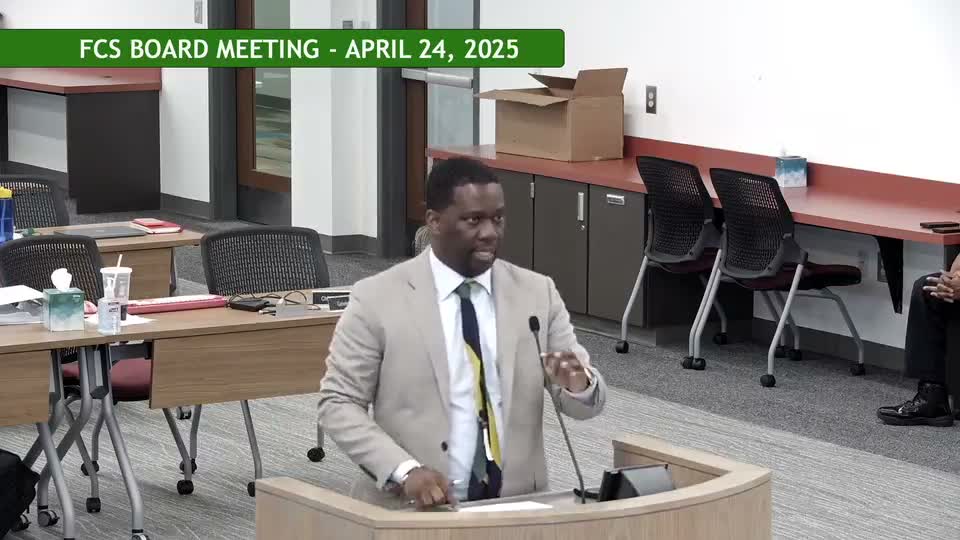
Brandon Gaskins, Fulton County Schools' chief academic officer, told the Board on April 24 that 17 district schools were currently on one of Georgia's state‑identified lists and outlined the district's supports to help those schools exit the lists.
Gaskins said the Georgia Promise Act list and other designations use Georgia Milestones performance and other criteria; for many schools exit opportunities are based on performance during the exit year and announcements typically come months after testing. "The most recent version of the list was published on 02/17/2025," he said.
District supports and data: Gaskins described a two‑part approach with short‑term targeted training (TNTP work launched in January for selected middle schools) and longer‑term audits and opportunity scorecards intended to inform school plans for math and literacy. He emphasized the district's use of multiple interim data points (iReady diagnostics, district unit assessments and a teacher tracker tool) and regular site visits with zone superintendents and principal leadership teams to monitor implementation.
What the diagnostics show: Gaskins walked the board through midyear iReady reading and math comparisons (winter 2023–2025). He said most schools met the 60% progress‑toward‑typical growth midyear goal, though achievement levels remain below the 2024 Georgia Milestones averages in several zones. The presentation used quadrant charts (achievement vs. median growth) to project which schools might improve by spring milestone results and which schools need intensified intervention.
Board requests and next steps: board members requested cohort‑level analyses (following the same students over time where possible), further detail on what successful schools (for example, Conley Hills) implemented and additional reporting on mobility and attendance as factors in performance. Gaskins and other district leaders committed to provide cohort analyses when feasible and stressed that supports removed after a school improves must be phased out gradually to avoid relapse.
Gaskins and Superintendent Looney both said the district expects TNTP's audit findings and recommendations to inform the FY2025–26 school improvement plans and professional development schedule.
The board did not take action on the update; district staff said they will return with additional cohort reporting and TNTP findings in follow‑up briefings.