Get Full Government Meeting Transcripts, Videos, & Alerts Forever!
Get email alerts on the Intellectual Freedom And Staffing topic
No spam. Unsubscribe anytime.
Library leaders warn of rising challenges to freedom to read and workforce strain
Summary
Library leaders told the committee that coordinated challenges to materials, doxxing and threats to staff are increasing nationwide and in New York, discouraging applicants and prompting calls for protections; witnesses also urged civil-service and retirement reforms to help recruit and retain staff in small and association libraries.
Multiple witnesses told the Assembly committee that increasing censorship challenges and online harassment are taking a toll on library workers and operations.
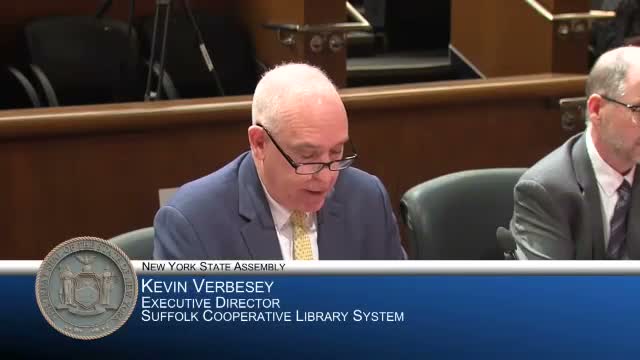
Kevin Berbice (Suffolk Cooperative Library System) and other system directors described a ‘‘dangerous rise’’ in attempts to limit access to materials, noting many challenges have targeted titles by or about LGBTQIA+ and BIPOC authors. NYLA witnesses said that between January and August 2024 the American Library Association’s Office of Intellectual Freedom logged hundreds of challenges and that social-media-driven harassment and doxxing have contributed to attrition among librarians.
Witnesses urged state-level measures to protect intellectual freedom and to consider protections for library staff facing harassment. Separately, speakers addressed workforce and benefits issues: Pablo Kaskill and others requested civil‑service reforms to ease hiring delays and to allow broader noncompetitive part‑time hiring; Joe Burke and association-library witnesses advocated legislative mechanisms (examples included Assembly bill A4885) to permit association libraries access to the State and Local Retirement System to improve recruitment and retention.
Why it matters: witnesses said the cumulative effect of harassment, threats and limited retirement or civil‑service access makes it harder to retain professionals, particularly in smaller or association libraries, with downstream effects on services and community programs.
Next steps: committee members acknowledged these multifaceted concerns and signaled interest in reviewing civil‑service hiring practices and retirement-access proposals during the next session.