Get Full Government Meeting Transcripts, Videos, & Alerts Forever!
Get email alerts on the Ebooks topic
No spam. Unsubscribe anytime.
Libraries push Albany to act on ebook licensing after years of costly 'metered' terms
Summary
Library officials presented testimony about ebook licensing that lets publishers sell libraries limited-use leases (metered access), forcing frequent repurchases and long holds; witnesses urged the Assembly to advance ebook legislation to secure fairer terms for public libraries and patrons.
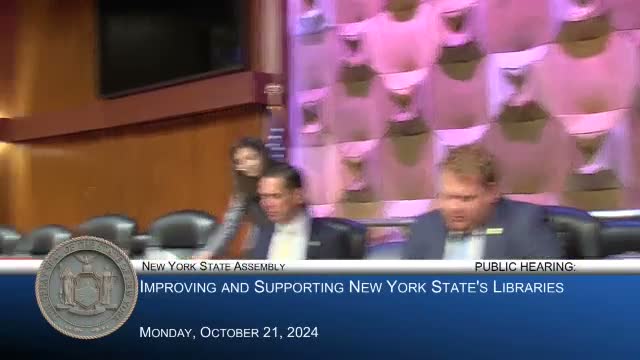
Library directors and system leaders told the Assembly committee that current ebook licensing models—often metered by checkouts or time limits—impose disproportionate costs on public libraries and limit access for readers.
Adam Traub, chair of NYLA’s legislative committee and director of Webster Public Library, illustrated the problem with a bestselling title: the retail ebook price is roughly $15 but a library license for the same title can cost about $60 per copy under current terms and then expire after a fixed number of checkouts or a set time. Traub said that practice creates long holds and forces repeated repurchases, noting one bestseller with hundreds of holds and limited copies across a system.
NYLA and other witnesses asked the Assembly to reconsider the ebook terms that effectively ‘‘rent’’ digital titles instead of allowing libraries to purchase durable access. Assembly members and library directors discussed prior legislation—Assembly and Senate activity last year—and signaled interest in taking up revised ebook legislation that aims to protect libraries’ ability to provide equitable digital access while respecting authors’ and publishers’ intellectual property.
Why it matters: witnesses said that ebook demand surged during the pandemic and has remained elevated, forcing systems to spend a growing share of collections budgets on ephemeral digital licenses. Speakers argued this reduces libraries’ ability to invest in other services and that state policy could address market imbalances or provide leverage in negotiations.
Next steps: the committee said it would consider prior Assembly proposals in a future session; witnesses recommended continued coordination with NYLA on data and proposed statutory language to reduce the repeated licensing burden on public funds.