
Experts tell Assembly committee MAT rollout has increased access but raised operational and equity concerns
Get AI-powered insights, summaries, and transcripts
Subscribe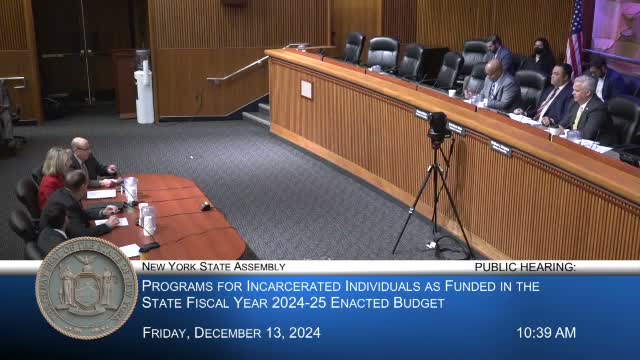
Summary
Witnesses praised expanded MAT participation but raised concerns about dose reductions, coerced formulation changes and uneven access across facilities, and urged training, oversight and statutory fixes to protect treatment continuity.
At a public hearing of the Assembly Standing Committee on Correction, legal advocates, medical reviewers and oversight organizations described strides in expanding medication‑assisted treatment (MAT) while also laying out operational and equity concerns that they want the legislature to address.
James Bogan of Prisoners Legal Services testified that some patients have had doses reduced to ineffective levels and that some staff have pressured people to switch from oral MAT to monthly injectable formulations despite serious side effects; he recommended comprehensive training, improved oversight and access to all MAT forms. Bogan also recommended amending Correction Law sections cited in testimony to create a presumption in favor of granting good time where people lose credit because programs were unavailable and to ensure appeals when good time is withheld.
Sameet Sharma of the Correctional Association reported a marked increase in MAT participation after codification of the program: a 52 percent increase in active participants from July 1, 2022 to July 1, 2023 and approximately 3,568 participants as of March 1, 2024. Legal Action Center witnesses flagged racial disparities in earlier DOCS reporting, noting that past DOCS data showed a substantially lower share of Black recipients compared with the racial composition of the prison population; they urged improved racial data collection and transparency.
Witnesses proposed concrete steps: standardized MAT clinical training for correctional health staff, clearer grievance or appeal paths when treatment or good time is withheld, and statute changes to align disciplinary practices with medical treatment obligations. The committee indicated it would review DOCS reports and outside monitoring data and may pursue statutory or oversight remedies informed by the testimony.
No formal policy change was voted on during the hearing; committee members asked for additional documentation and recommended follow‑up with health services and program administrators.