Get Full Government Meeting Transcripts, Videos, & Alerts Forever!
Get email alerts on the Bus Depot Relocation topic
No spam. Unsubscribe anytime.
Parents, doctors press Moorestown board over proposed bus depot behind Upper Elementary School; superintendent says alternatives being sought
Summary
Residents at the Dec. 17 Moorestown Board of Education meeting urged the board to remove or relocate a proposed bus yard from the Upper Elementary School site, citing traffic, loss of play fields and diesel exhaust health risks; Superintendent Joe Bollendorf said the district is seeking alternative sites and plans to phase out diesel buses.
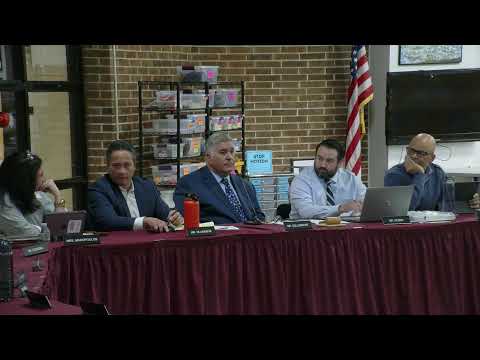
At the Moorestown Township Board of Education meeting on Dec. 17, multiple residents pressed the board over a proposal to relocate the district’s bus yard to land behind the Upper Elementary School (UES), saying the plan could worsen traffic, remove elementary play space and expose children to vehicle exhaust.
“We don’t have the state aid numbers; how do people know what they are voting on?” said Brooks Garrison, a district graduate and parent, asking about the referendum’s funding and the timing of state estimate letters. Garrison also raised traffic concerns tied to a large housing development across from the UES and asked whether a traffic study had been done.
Dave Clark, a neighbor who lives immediately behind the UES lot, said moving buses onto the field area would take away recreational space used by UES students and harm neighborhood quality. “I don’t think it’s a responsible use of your property,” Clark said, urging the board to reconsider using the field.
Chad Gonzale, a physician, cited medical literature on diesel exhaust and particulate matter and urged the board to study potential respiratory and reproductive health effects before siting the bus yard near children. “It affects children, their airways, exacerbates asthma,” Gonzale said, and asked the board to review relevant studies.
Speakers asked whether the bus yard could be removed from the referendum package or be placed elsewhere; some requested more notice and clearer alternatives from the district.
Superintendent Joe Bollendorf responded directly to the concerns, saying the drive to relocate the bus yard is driven principally by curricular and operational needs at the high school. Bollendorf told residents the current bus yard occupies indoor space at the high school that the district wants to reclaim for academic use and that the site creates security and operational problems: “The bus yard has to leave the high school,” he said, adding that the move enables improved traffic patterns and curricular expansion at the high school.
Bollendorf said the district has been meeting with municipal officials to identify alternatives and is evaluating at least four properties; he emphasized the UES is not a foregone conclusion. “We are looking. But I do want to clarify a few things: I would never put kids out of recreational space in favor of a bus yard,” Bollendorf said, adding the bus yard would be placed toward the far corner of the UES property if chosen and that new playground plans are part of the concept.
On fuel type and air-quality concerns, Bollendorf said the fleet is already majority gasoline-powered and the district plans to phase out diesel. “Seventy-five percent of our current bus fleet is gas, not diesel. By the time this bus yard goes in, we are phasing out all diesel vehicles. In three years, we should have nothing but gas vehicles,” he said, framing that as a mitigation step rather than independent verification of health effects.
The superintendent invited residents to review the plan in person and to identify potential alternative sites for donation or sale. He also noted the referendum and related master-plan projects are linked, and the board must weigh timing as state estimate-of-cost letters arrive.
The district did not provide an immediate traffic-study citation or a finalized environmental analysis during the meeting. Board members and administrators said they would continue outreach, make plans and meet with residents who requested additional information.
The next procedural steps cited by administration were review of state estimate-of-cost letters for the referendum and continued site searches in coordination with municipal officials; no binding site decision was announced at the Dec. 17 meeting.