Get Full Government Meeting Transcripts, Videos, & Alerts Forever!
Get email alerts on the Oglesby Rezoning topic
No spam. Unsubscribe anytime.
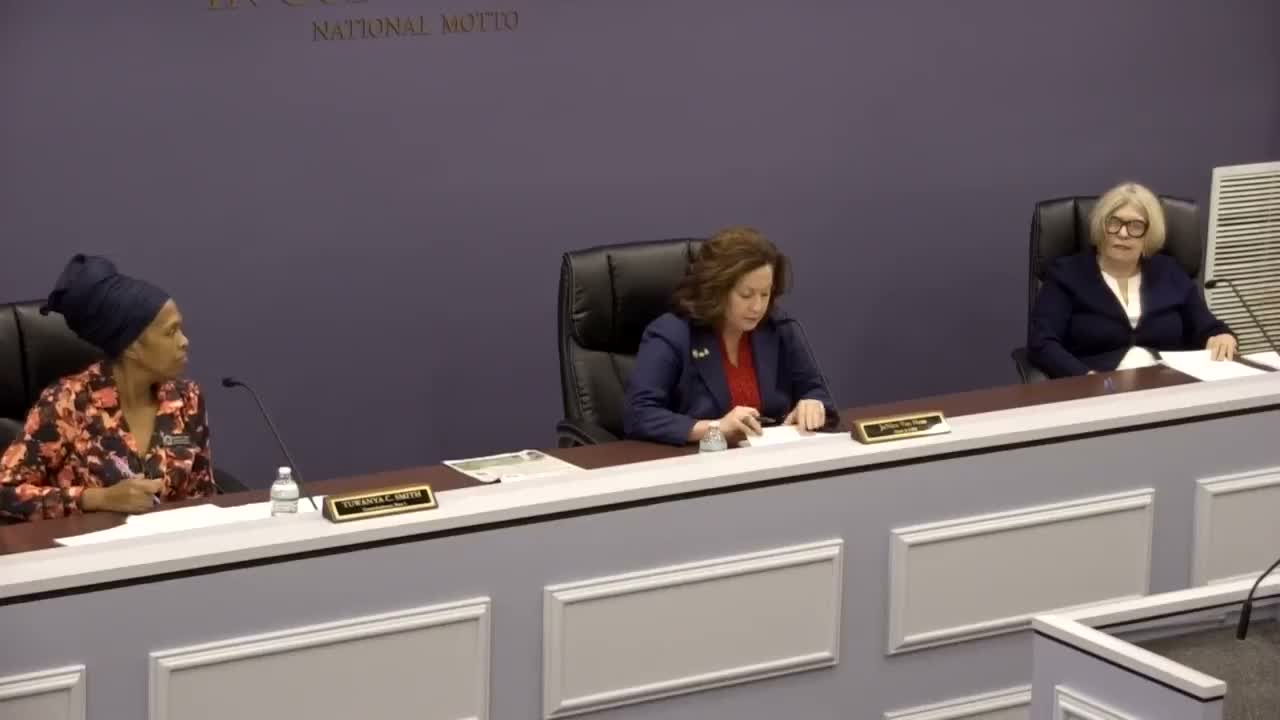
Neighbors oppose commercial rezoning at Oglesby Bridge Road; planning staff recommends approval with conditions
Summary
Planning staff recommended approval of rezoning case 2024‑28 to allow neighborhood commercial at 1929 Southwest Oglesby Bridge Road with multiple conditions (traffic study, sidewalks, underground utilities, prohibited uses). Neighbors urged denial or an explicit exclusion of a gas station; the applicant cited constitutional property‑use concerns and noted limited sewer availability.
Planning staff recommended that Rockdale County rezone 10 acres of a 44.76‑acre parcel at 1929 Southwest Oglesby Bridge Road from AR (agricultural residential) to C‑1 (local commercial) to allow a neighborhood commercial node, but multiple neighbors urged the Board of Commissioners to deny the commercial rezoning or to exclude gas stations.
Laura Parker, deputy director of planning and development, told the board the request had a long history of hearings and reviews and that internal and external departments raised two primary technical issues: Georgia Department of Transportation coordination for a deceleration lane on Georgia Highway 212/Oglesby Bridge Road, and the lack of public wastewater at the site. Staff recommended approval with conditions that include: compliance with the C‑1 zoning district and the Unified Development Ordinance; a traffic impact study and incorporation of recommended improvements into the land‑disturbance permit; environmental health approval before permits are issued; a 5‑foot sidewalk along Oglesby Bridge Road and GA‑212 separated from curbs by a planted strip; underground utilities; sodded turf areas; screening of stormwater detention ponds from adjacent residential properties; and explicit prohibitions on certain uses (vape shops, liquor stores, small “dollar‑type” box stores such as Dollar Tree/Family Dollar/Dollar General, and beauty supply stores). The staff conditions also suggested adding bollards to building facades and other site‑design controls.
The applicant’s representative said the project has been before local bodies multiple times, described prior density proposals (as many as 240 units) that were reduced to lower densities and noted efforts to work with staff and the planning commission. The representative raised a constitutional objection on behalf of the property owner, saying the current zoning denied the owner fair use and reserving the right to continue appeals if conditions exceed agreed recommendations. He also said bringing public sewer to the location would have required much higher residential density to fund the extension and that, absent sewer, the commercial component would rely on septic as other nearby properties do.
Five residents spoke in opposition during public comment. James Corbett, who lives across Highway 212 from the site, urged commissioners to deny the rezoning unless a gas station is explicitly excluded, noting there are already many gas stations within a four‑mile radius and expressing concern that small independent gas/convenience stores often host other businesses (liquor, video poker, vape sales) the community opposed. Other speakers echoed concerns about neighborhood character, environmental risks from underground tanks, and the inability of existing businesses at that intersection to sustain new retail. One speaker also referenced an ongoing civil lawsuit involving the county and the parties, saying that litigation had not changed the community’s objection.
No final decision on rezoning 2024‑28 was made at the June 26 zoning hearing; staff said any final action will occur at a subsequent Board of Commissioners meeting and the matter was remanded for the board’s reconsideration.