Get Full Government Meeting Transcripts, Videos, & Alerts Forever!
Get email alerts on the Budget Overview topic
No spam. Unsubscribe anytime.
Kennesaw unveils $34.56 million FY2026 recommended budget, holds millage at 7.75 mills
Summary
City officials presented a recommended FY2026 operating budget of $34,561,000 that keeps the millage rate at 7.75 mills, builds a 3% cost‑of‑living increase into department budgets, and adds roughly $635,000 to reserves while warning of revenue pressures from slowed development.
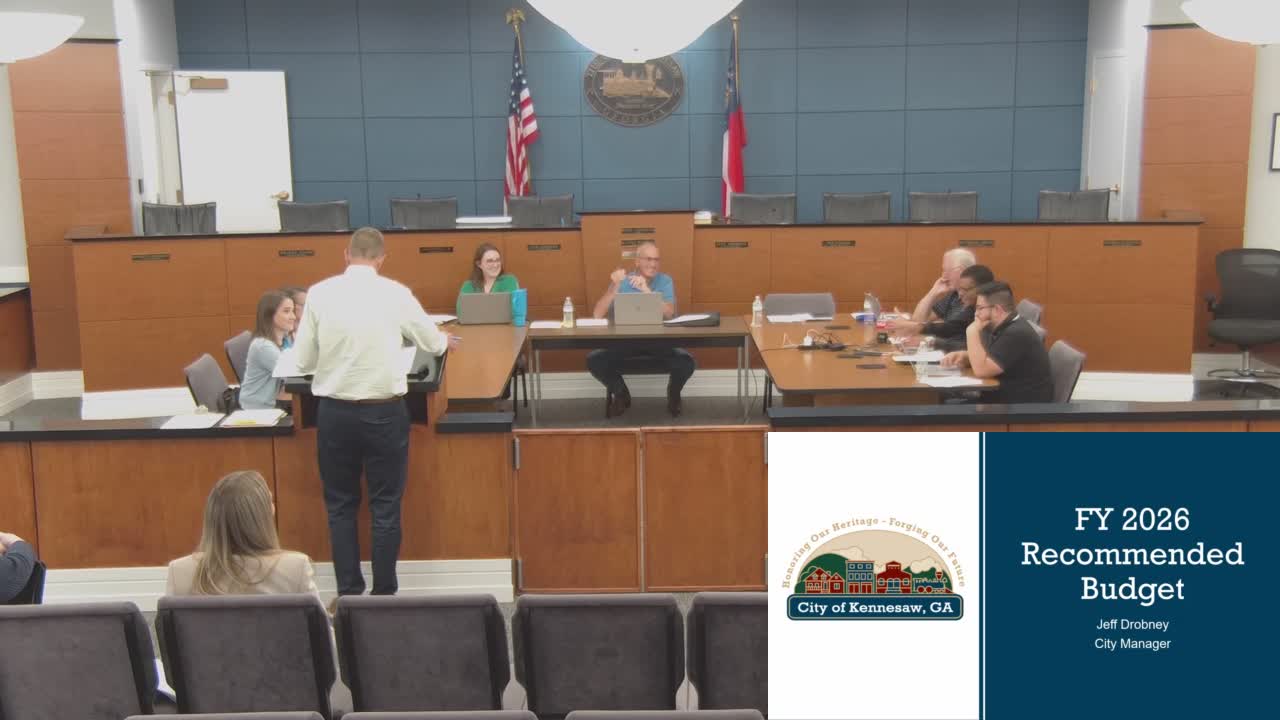
Jeff, the presenter at the work session, submitted the recommended FY2026 operating budget of $34,561,000 for Oct. 1, 2025–Sept. 30, 2026 and said the plan reflects multiple revisions and analysis. "We are pleased to submit, for the consideration, the recommended budget for FY '26, totaling $34,561,000," he said.
The proposal would hold the millage rate steady at 7.75 mills, include a 3% across‑the‑board cost‑of‑living adjustment (COLA), and add approximately $635,000 to the city's reserves. Officials described the budget as balanced and consistent with State of Georgia requirements, including the need to set a millage rate and conduct public hearings.
Why it matters: staff and council warned that this budget comes amid a slowdown in residential and commercial development that has reduced some revenues. The presenter said Cobb County expects a modest 2% increase in the countywide tax digest, but building‑permit revenue has fallen sharply — from about $1.2 million in FY2022 to a projected $300,000 for FY2026 — a loss that materially affects the city's revenue outlook.
Revenue highlights from finance staff show the general fund revenue estimate at roughly $34.5 million, up about 7.6% year over year, driven by modest tax growth, higher investment income and increased parks-and-recreation program fees. The budget assumes drawing $1.5 million from prior‑year reserves for paving projects and grant matching.
Spending highlights include the built‑in 3% COLA and benefit cost increases (health benefits noted at about a 7% rise). Departments requested 10 full‑time positions; staff said the recommended budget could support two midyear hires (one tied to the new public‑safety facility and one horticulture technician for the city gardens), plus two part‑time seasonal positions for Adams Park tied to revenue performance.
The council and staff stressed that federal grants and project‑based funding shape capital plans and may require local matches. The presenter said staff will continue departmental reviews and return to council for further discussion and formal action.
Next steps: the recommended budget will proceed through the council’s normal review process and public hearings required by state law. Council members thanked staff for the prepared materials and adjourned the work session.