Get Full Government Meeting Transcripts, Videos, & Alerts Forever!
Get email alerts on the Attendance topic
No spam. Unsubscribe anytime.
Fulton County Schools discontinues attendance‑recovery bus pilot after mixed results
Summary
After a four‑month pilot at Brookview and Heritage Elementary Schools that logged 716 rides and did not meet a 20% reduction goal, the Fulton County Board of Education voted unanimously to discontinue the attendance recovery bus pilot and asked staff to return with further options and analysis.
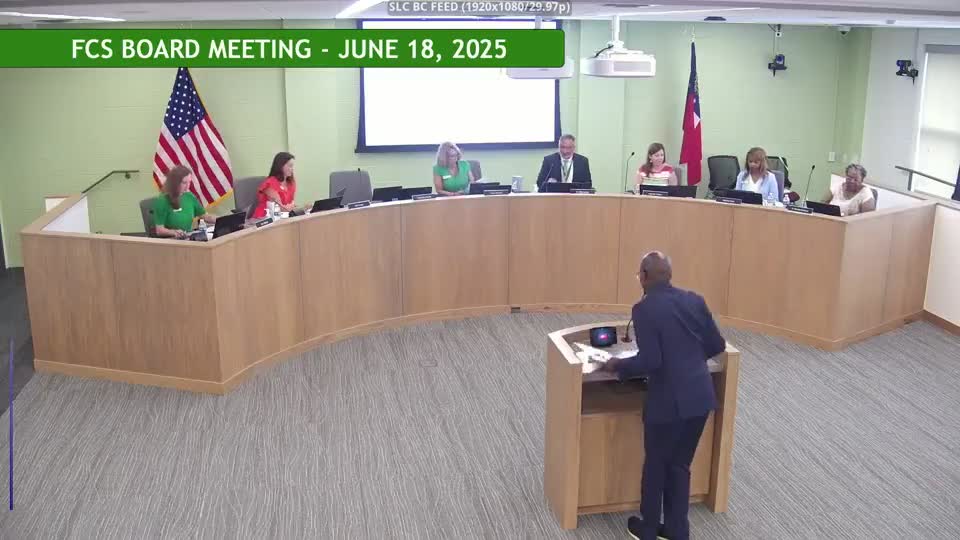
The Fulton County Board of Education voted June 18 to accept staff’s recommendation to discontinue an attendance‑recovery bus pilot at Brookview and Heritage Elementary Schools after the program failed to meet its stated goal.
"As mentioned earlier in the presentation, the pilot did not achieve the goal of a 20% reduction in daily absence rate within the pilot period," Dr. Charice Campbell, Zone 1 superintendent, said during the board presentation. Researchers from Maple at Georgia State University assisted the district’s analysis.
The pilot, launched in January 2025, aimed to lower the daily absence rate by 20% (targets: Brookview 8.3%, Heritage 7.4%). Results varied across the pilot period: staff described an early 17% reduction at the start of implementation, followed by a shift to a 2% increase in daily absences later in the year. Staff said districtwide second‑semester increases in absenteeism likely influenced the trend and may not be attributable solely to the intervention.
Operational and usage details presented to the board: the pilot recorded a total of 716 rides, with an average of 5.6 rides per rider; ridership was higher at Heritage, which has roughly 181 more students than Brookview. Staff reported users tended to fall into the "satisfactory" and "at‑risk" attendance tiers, and that more than half of users were at risk of chronic absenteeism prior to the pilot. Mercedes Jackson, coordinator of school social work services, explained that social workers performed targeted phone outreach and the district issued automated callouts on school days to notify families that a recovery bus would arrive later that morning.
Superintendent Doctor Looney and staff identified personnel costs (notably the cost of drivers) as the primary expense of the service and said return‑on‑investment did not justify continuing the full‑size bus approach. Board members asked for more granular data on reasons families cited for absences (illness, transportation, other barriers) and whether smaller, targeted transportation options could be more cost‑effective.
The board voted unanimously to discontinue the pilot and directed staff to continue analyzing root causes and propose adjusted interventions. Staff noted that the full study by Maple at Georgia State University will be completed later in the summer and that district staff will return with options informed by that work.