Fulton County board reviews tougher code‑of‑conduct rules: K–8 device restriction, AI misuse and escalated consequences for distribution
Loading...
Summary
District officials proposed 2025–26 changes to the student code of conduct, including a K–8 restriction on personal devices during school hours, a new rule banning misuse of AI/false images and elevated tiers for distribution of tobacco/vape products; the board asked about implementation, training and communication plans.
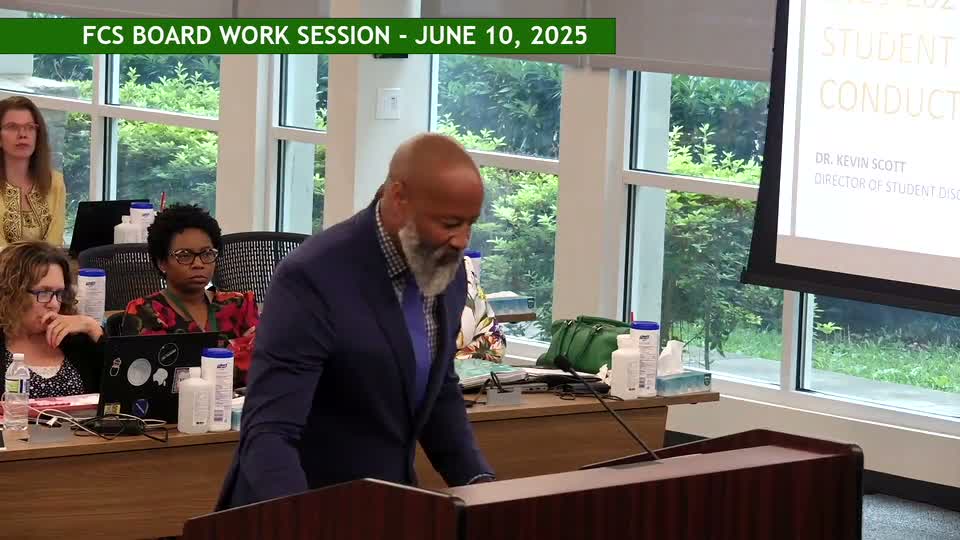
Doctor Kevin Scott, director of student discipline, prevention and intervention, briefed the Fulton County Board of Education on proposed revisions to the student code of conduct for 2025–26 that would standardize discipline responses and add several new rules.
The proposed additions include:
- Reclassifying tobacco/vape distribution as a Tier‑3 violation with stronger consequences, and treating manipulated devices or substances containing illegal drugs as Tier‑4 drug distribution when applicable. - Adding explicit language banning unwelcome physical contact with intimate areas, even when intent is unclear. - Introducing a Tier‑3 rule for "misuse of AI or false images," prohibiting creation or sharing of AI‑generated or digitally altered media that misrepresents individuals or disrupts school environment (language includes images and audio). - Revising the cell‑phone policy to prohibit personal communication devices during school hours for K–8 students unless authorized for instructional or medical reasons, aligning the district with Georgia House Bill 340 (Distraction‑Free Education Act).
Scott also described a tiered escalation approach that emphasizes supportive discipline techniques and three documented interventions before moving to Tier‑2 consequences. For fights, the proposed framework sets escalating ISS/OSS ranges and a route to disciplinary hearings for repeated or severe incidents.
Board members asked how the district will teach appropriate AI use and what training will be provided to staff and students. Scott and district staff said required staff training on responsible AI use was delivered last summer for middle and high school teachers and is being expanded to elementary teachers; academics staff embedded AI responsible‑use content in digital citizenship for grades 6–12 and plan an AI conference and additional professional development.
Members also pressed for clarity on in‑school suspension (ISS) practices, instructional expectations for ISS, communications to families, and whether the vaping/distribution language should include broader phrasing ("including but not limited to e‑cigarettes, JUULs, ZEN") to avoid loopholes. Scott said legal counsel will review language and that the revised handbook will be published online and printed copies made available after approval.
The item was presented for information at the work session. Staff indicated the handbook and code would be distributed to families once approved by the board.