Get Full Government Meeting Transcripts, Videos, & Alerts Forever!
Get email alerts on the Policy topic
No spam. Unsubscribe anytime.
Board reviews first read of electronic-communications policy that would bar personal devices for K–8 students
Summary
Staff presented a first-read policy that would prohibit personal electronic devices for K–8 students during the school day, limit device use in grades 9–12 during instruction, and add communications and exception language tied to state law; board members urged robust, multilingual outreach.
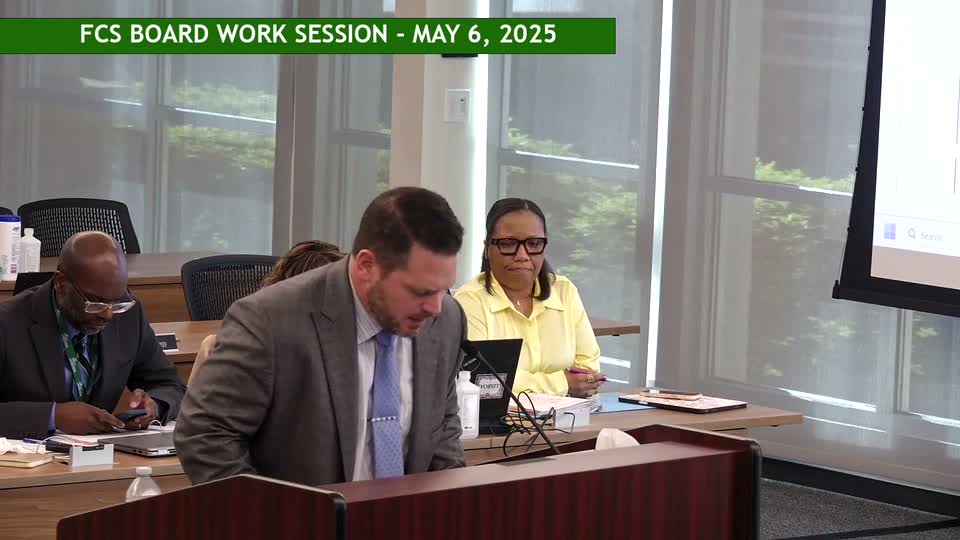
At the May work session, district staff presented policy IFBGA (Electronic Communications) for first read, proposing a ban on personal electronic devices for all students in kindergarten through eighth grade during the school day and limits on personal devices for high school students during instructional time.
Ryan Moore, executive director of strategy, said the policy updates reflect both district decisions and changes required by recent state legislation. He told the board the policy "prohibits the use of personal electronic devices for all students in grades K through 8 during the school day" and defines electronic devices broadly to include smartphones, smartwatches, tablets and laptops.
Board members emphasized the need for broad, multilingual communications, training and office hours for parents, teachers and principals before the policy takes effect. One board member requested that staff prepare materials to ensure consistent expectations and to identify and close potential loopholes during implementation.
Staff said the policy includes exceptions to avoid discrimination against students with 504 plans or IEPs, and cross-references code-of-conduct language for cyberbullying and related enforcement. The board did not vote on the policy at the work session; it was presented as a first read with anticipated additional review and community outreach before a final vote.