Get Full Government Meeting Transcripts, Videos, & Alerts Forever!
Get email alerts on the Budget And Grants topic
No spam. Unsubscribe anytime.
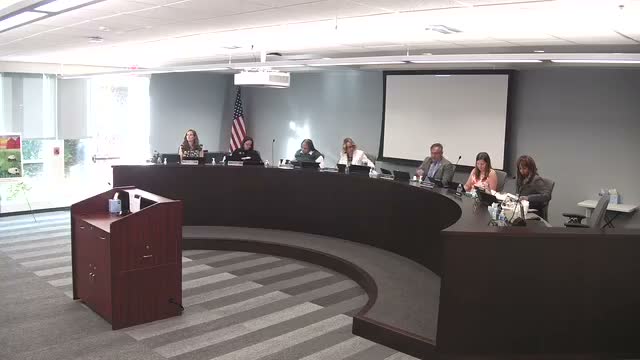
Board hears presentation on federal grants, special education costs and Pre‑K funding requests
Summary
District staff told the board the loss of ESSER funding will lower federal grants to about $86.8 million in FY26, while the board is investing roughly $215 million locally to cover special education costs; Pre‑K leaders requested $4.7 million in local support for FY26.
Tracy Watson, executive director of budget services, told the Fulton County Board of Education on April 17 that anticipated federal grant receipts for fiscal year 2026 are approximately $86.8 million, a decline attributed in part to the sunsetting of ESSER funds. Watson said the district proactively shifted essential programs into the general fund to prepare for reduced federal support.
During discussion Dr. Looney addressed special education funding and local investment, saying the federal government covers only a small portion of total special education expenses and that the district is supplementing services with local funds. "The federal government actually doesn't fund but about 20% of the expense," Dr. Looney said, and he described "the $215,000,000" as the board's investment in special education services for Fulton County.
Board members pressed for context and staff answered questions about enrollment: while overall district enrollment is slowly declining, special education enrollment — and particularly high‑cost special education needs such as autism — has increased. Services for exceptional children staff said Title 6B funding covers a limited share of costs (noting that Title 6B currently covers roughly 13% of what IDEA originally envisioned) and that most federal funds are spent on personnel.
On Pre‑K, the director presented a proposed FY26 Pre‑K budget of $15,000,000, with estimated state revenue around $10,300,000 and a requested local supplement of $4,700,000 (up from $3,600,000 in FY25). Staff noted the grant covers primarily personnel and equipment but does not reimburse other building overhead and transportation costs.
Board members and staff discussed related personnel allocations and the fiscal impact of moving positions from carryover to the general fund; Dr. Looney said staff will continue to analyze how to maximize teaching ratios while meeting program requirements. Final budget decisions, including how local investments support special education and Pre‑K, will be part of the FY26 budget adoption process in June.