
Superintendent emphasizes in‑person instruction, outlines snow‑day options and strict high‑school phone rule
Get AI-powered insights, summaries, and transcripts
Subscribe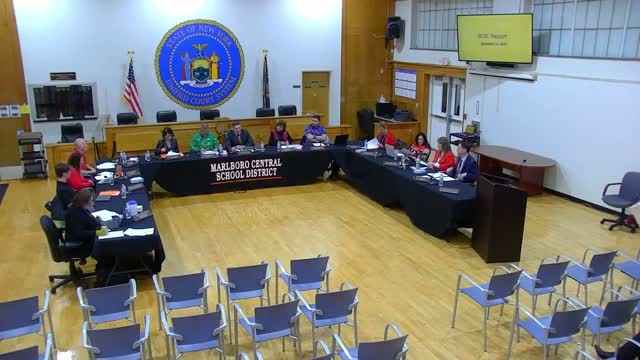
Summary
Superintendent Rydell reviewed weather‑related scheduling options, said remote instruction under policy 7150 should be reserved for extended closures, and announced a strict high‑school phone enforcement policy with referrals and detentions for violations.
Superintendent Mike Rydell told the Marlboro Central School District Board that the district will continue to prioritize in‑person instruction when scheduling weather‑related closures, and that remote instruction under district policy 7150 is intended for extended or exceptional circumstances, not routine single‑day weather events.
"That is not something that is going to be something that is utilized outside some really extenuating circumstance," Rydell said of remote instruction. He described the district’s planning process for weather calls—monitoring forecasts, consulting facilities staff and town/county/state highway reports—and explained that the district’s calendar includes preplanned "giveback" and "takeaway" days so families know which dates could change if emergency days are used.
Board members asked whether remote instruction could be used to avoid taking days from spring break. One member, Trish, suggested considering remote instruction as an alternative if the district exhausts snow days. Rydell and other board members raised equity and access concerns: some students lack reliable devices or connectivity and weather varies across the district, making remote instruction uneven. "When you have policies like 7150, that can come into very good utility," Rydell said, but he reiterated a preference for preserving in‑person learning.
Rydell also outlined a new enforcement approach at Marlboro High School for cell phones in instructional time: phones must be "off and away," and teachers will submit a referral if a phone is used. "If a referral goes in, first infraction, there is no warning. It's a detention. Subsequent infractions will lead to ISS," he said, describing the disciplinary ladder the district will use after winter break.
The superintendent said the high‑school administration and student voice committee report that students were less distracted when phones were restricted in trial runs. Rydell said communication will go to parents and teachers outlining expectations and that staff will implement the policy "with 100% fidelity."
The board recorded the discussion and no formal policy change was voted on at the meeting; the item was presented as the administration’s plan for consistent enforcement.