Superintendent urges participation in NYSED regionalization process, summarizes Rockefeller Institute foundation-aid study
Summary
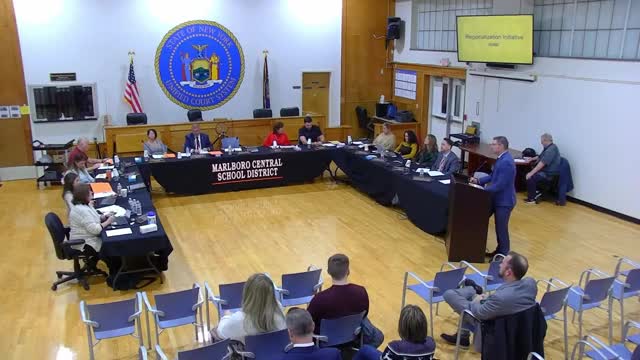
Marlboro superintendent reviewed New York State Education Department regionalization work and the Rockefeller Institute’s Foundation Aid study, stressing that completing the strength-and-needs tool preserves the district’s ability to advocate for funding and that several recommendations could affect local aid, reserves and tax-levy calculations.
The Marlboro Central School District superintendent, Mike, told the board the district completed the state 'strength and needs' tool and intends to participate in locally developed regionalization planning coordinated through Orange–Ulster BOCES to keep a "seat at the table" as New York State shapes future funding and regulatory recommendations.
The superintendent said the strength-and-needs survey is "voluminous" and documents historical and current district data. He urged participation so the district could list funding gaps and priorities that the State Education Department (NYSED) may use to shape budget and legislative proposals. "If your district is not named as being part of any part of the plan, then you're not part of the plan. You are not required to do anything," he said, underscoring that participation is a choice but offers advocacy leverage.
He then summarized the Rockefeller Institute of Government's research on Foundation Aid, describing it as a 300-page research product with a menu of policy options rather than a final plan. Notable points he referenced from the study included a roughly $25 billion increase in state education spending over about 10 years and a roughly 300,000-student decline in public-school enrollment during the same period. The report recommends measures such as multi-year metrics to reduce volatility in aid, scaled weightings for English-language learners and students with disabilities, adjustments to local minimum contribution calculations, limits or reallocation of certain tax-relief (STAR) credits at the county level, and a proposal to phase out at least 50% of hold/save-harmless provisions over five years.
Mike cautioned that many recommendations would require negotiation and are not final. He noted a follow-up statement from the governor advising that the executive budget should "avoid proposals that would negatively impact school budgets," which he said was a promising sign for districts. Board members raised concerns about how proposals could interact with the property-tax cap and the district's fund balance, and one board member asked whether participating in the process could expose fiscally prudent districts to reduced local control; the superintendent reiterated that local participation documents district needs for future advocacy.
The superintendent also highlighted implementation timing: the locally developed plans are being targeted for October 2025, with any state budget or regulatory changes potentially affecting the 2026–27 school year. He called the Rockefeller study "research" and urged the board to consider the report’s recommendations carefully as negotiations proceed in Albany.
Next steps cited by the superintendent include monitoring state guidance, participating with the Orange–Ulster BOCES regional planning process, and preparing for potential changes to the Foundation Aid formula and related budget impacts.