
Arkansas farmers describe alternate wetting and drying as water-saving rice irrigation
Get AI-powered insights, summaries, and transcripts
Subscribe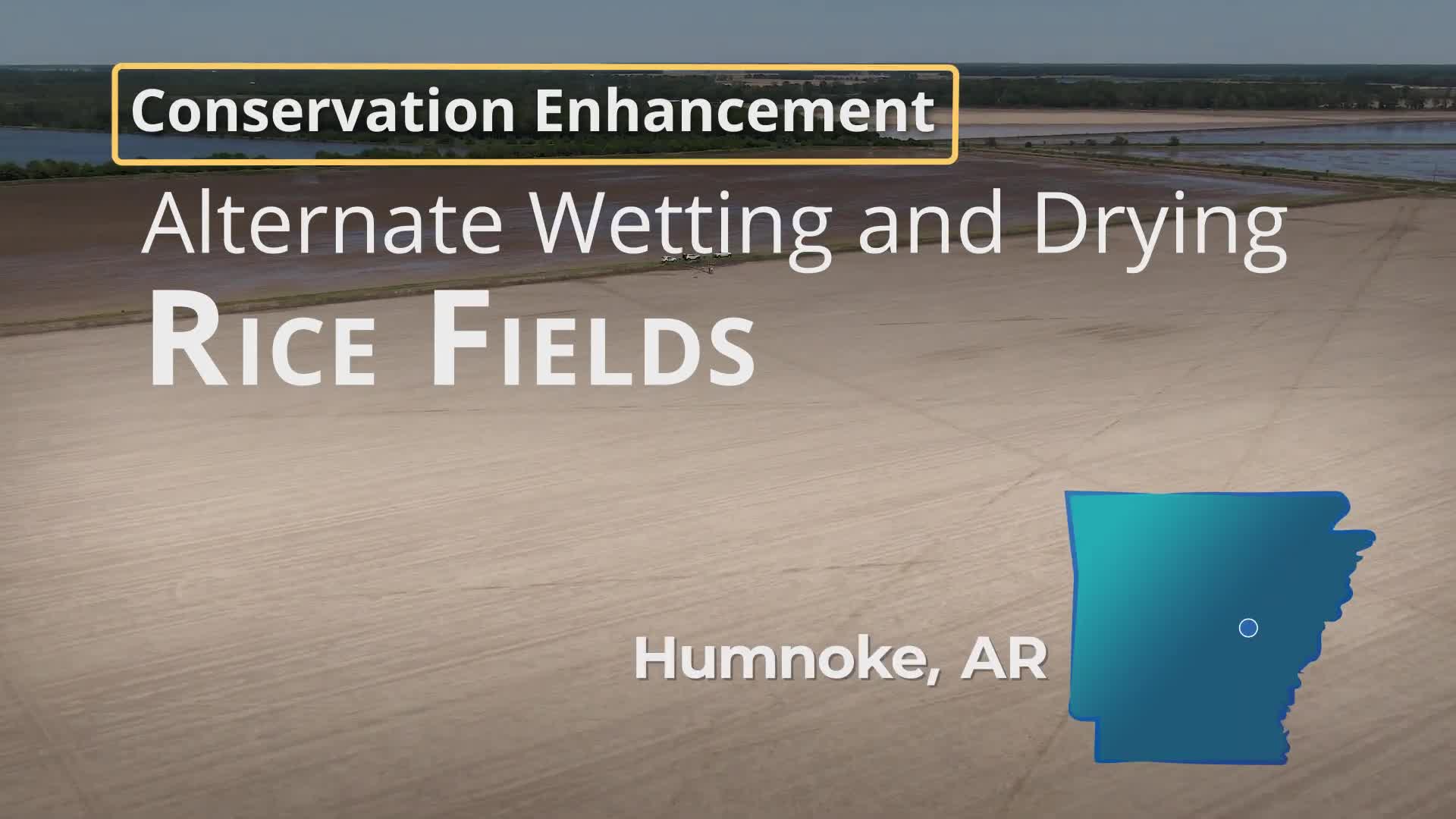
Summary
In a short recorded exchange from Glen Cove County, Central Arkansas, two speakers described alternate wetting and drying (AWD) as an irrigation method that conserves water and energy and can interrupt methane production while maintaining rice yields; they credited USDA-NRCS support for adoption.
In a brief recorded discussion in Glen Cove County, Central Arkansas, two speakers described alternate wetting and drying (AWD) as an irrigation method for rice that can save water and energy while limiting methane emissions. Speaker 1 opened the conversation by saying, "Today we're looking at alternate wetting and drying of rice."
Speaker 1 outlined typical Arkansas practice and the contrast with AWD, noting that "Typically in Arkansas, we plan our rice fields dry" and then, at the four- or five-leaf stage, "apply permanent flood across the whole field and maintain that flood until it's time to drain for harvest." The speaker added that research has shown rice "can drain the rice at certain growth stages and it doesn't hurt the yield," presenting AWD as compatible with production outcomes.
Speaker 2, who identified the setting as a family farm in Central Arkansas, Glen Cove County, said the operation grows about 3,500 acres of rice and that the farm implements AWD. Speaker 2 defined the practice: "it's an irrigation practice wherein instead of leaving the soil completely inundated throughout the season, we'll allow it to dry up somewhat in the middle summer."
On the reasons for adopting AWD, Speaker 2 described soil as a living system and explained the link to methane: "If you've ever been by anything that's swampy, that once you have organic matter or plant matter in a soil and you inundate it with water, there could be methane coming from that."
Speaker 1 summarized the practical benefits, saying, "Alternate wetting and drying is a great practice. It has 3 main benefits that conserves water and then if you're pumping less water, you're conserving energy. It breaks that cycle of of methane production that comes from rice."
Speaker 2 also noted external support for implementing AWD: "NRCS has been a great resource to us as we've tried to advance our conservation practices through the years." The conversation also mentioned nutrient-management practices as a related conservation effort.
No formal policy action or funding decision was announced during the exchange; the recording conveyed practical experience and favorable assessments of AWD from the farm perspective. The speakers emphasized water- and energy-savings, potential reductions in methane from intermittently drying soils, and technical support from USDA-NRCS as reasons the farm has pursued the practice.