
Charlottesville staff outline immediate fixes and long‑term plan after pedestrian death on Elliot Street
Get AI-powered insights, summaries, and transcripts
Subscribe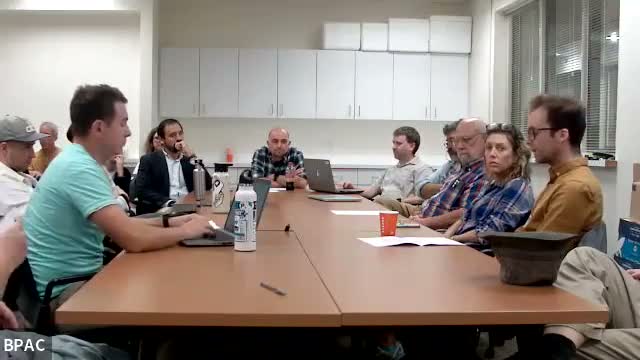
Summary
City transportation staff told the Bike & Pedestrian Advisory Committee they ordered rapid fixes at the Elliot Street crossing after a pedestrian fatality, will pilot rapid‑flashing beacons and speed cameras, seek capital funding for sidewalks, and begin scoping a comprehensive transportation plan with short‑, medium‑ and long‑term milestones.
Charlottesville transportation staff on Thursday told the city’s Bike & Pedestrian Advisory Committee (BPAC) they are moving quickly to make streets safer after a pedestrian was struck and killed at the Elliot Street crosswalk last month. Ben Chambers, the city’s transportation planning manager, described immediate, short‑term measures already in motion and a year‑long effort to design a comprehensive plan to reduce deaths and serious injuries.
“We started immediately that Monday morning trying to come up with a design that we could put on the ground as soon as we possibly could so that people knew that this was a place that we needed to have a safe crossing,” Chambers said. He told the committee staff had measured the roadway, planned lane‑narrowing treatments, installed reflectors and ordered a rapid‑flashing beacon for the Elliot crossing; that device is expected to take several months to install as it requires procurement and utility coordination.
Chambers framed the response as three overlapping efforts: (1) near‑term, tactical fixes at specific crossings; (2) a pilot program to test enforcement and traffic‑calming approaches; and (3) a scoped comprehensive transportation plan to align standards and investments across the city. He said the city adopted a regional safety goal that calls for cutting traffic deaths in half by 2045, and added that Charlottesville’s stated aspiration is to reach zero roadway deaths. “We should be eliminating deaths on our roadways by 2045,” Chambers said, and he emphasized the need to set interim milestones so progress is visible and accountable.
Staff described a vendor‑funded pilot for automated speed enforcement in school zones: three camera sites are planned (one near Summit/Montreal Avenue and two on Cherry Avenue — one by Buford and one by Johnson). Kyle Robin, the city’s Safe Routes coordinator, said construction on the camera installations should start in mid‑January and the pilot’s software and warning systems should be in place so first‑time offenders initially receive warnings; staff expect cameras to be active by mid‑February.
Chambers said some quick‑build work can use neighborhood transportation improvement funds already in hand; he also said staff will request larger capital investments in the next budget cycle, including a proposed $5,000,000 sidewalk funding ask. The committee discussed how to prioritize limited funds, whether to expand pilot locations and how to ensure equitable deployment citywide.
Committee members urged a faster timeline and more visible, measurable milestones. Several speakers questioned the optics of a 2045 horizon for eliminating deaths, saying a smaller city with lower average speeds could accelerate interim outcomes. Chambers acknowledged the messaging challenge and described the comprehensive plan scoping as a way to coordinate standards, close data gaps and identify where staff will need more resources or authority from council.
Members also raised near‑miss reporting and community engagement as critical inputs for prioritizing fixes. Staff said existing near‑miss reports and input from the quick‑build subcommittee and the city’s advisory panels (VPAC/BPAC) will be combined with staff data to produce deployment criteria for beacons, traffic calming and other interventions.
Other staff updates at the meeting included bike parking and quick‑build project status: 45 new bike racks are planned (17 in front of McGuffey, with 15 already installed), multiple corrals for events and markets, and 10 quick‑build improvements now in the public‑works work‑order system with several recently assigned to crews.
Next steps outlined to the committee: immediate installation of tactical treatments at high‑priority crossings where feasible; completion of the speed‑camera pilot and evaluation; public outreach coordinated through advisory panels and a newly launched city newsletter; and scoping and funding requests for a comprehensive transportation plan to deliver medium‑ and long‑term network changes.
The committee heard multiple offers to assist with outreach and project rollout and was encouraged to recruit residents to the quick‑build subcommittee. BPAC adjourned after announcing upcoming community events and continuing work on branding and a committee website.