Get Full Government Meeting Transcripts, Videos, & Alerts Forever!
Get email alerts on the Mental Health topic
No spam. Unsubscribe anytime.
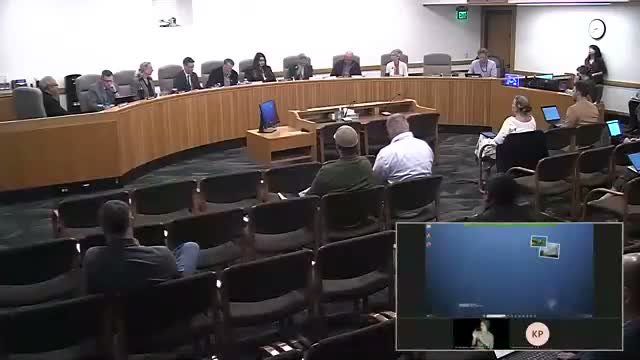
Committee advances House Bill 2005 to revise involuntary commitment rules and add behavioral-health funding
Summary
The Capital Construction subcommittee advanced House Bill 2005 after adopting a dash A5 amendment that adds fiscal authority and funding for OHA and the Public Defense Commission; members debated changes to civil commitment definitions, task force creation on tribal–state forensic behavioral health, and concerns about siting treatment facilities on industrial land.
The Capital Construction subcommittee advanced House Bill 2005 on a vote after adopting a dash A5 amendment that adds $6.5 million in total funds, including a $5.4 million general fund appropriation to the Oregon Health Authority and $1.1 million to the Public Defense Commission for public defense related to civil commitments.
A legislative fiscal presenter told the committee the measure “modifies the circumstances when an individual with a mental illness may be detained and committed to the Oregon Health Authority for involuntary treatment,” changes definitions for civil and criminal involuntary hospitalizations, and establishes a task force on the intersection of tribal and state forensic behavioral health, with OJD supporting the task force. The presenter noted the measure declares an emergency and that some provisions have later operative or repeal dates.
Several members weighed the trade-offs between expanding treatment capacity and protecting other community interests. Representative Greg Smith said he did not view himself as an expert and urged the body to be “humble” about the committee’s limits while trusting stakeholders’ input. “I’m gonna trust the collective wisdom of the group,” he said (first spoken in committee comments).
Other members described months of stakeholder work involving Disability Rights Oregon, courts, district attorneys, defenders, hospitals and community providers that informed the bill. Supporters said the measure aims to build community stabilization centers and residential treatment capacity so fewer people need state hospital care. One member described the faster police drop-off times at a stabilization center versus booking in jail, noting those centers “save on jail utilization” and emergency-resource use.
At least one senator raised land-use concerns. “Why are we taken out to locate a behavior health clinic…in industrial land?” a committee member asked during debate, arguing that allowing behavioral-health uses on industrially zoned land could reduce available industrial acreage and affect economic development. Other members said the bill contains qualifying language limiting where those uses can be sited and that intended uses include residential treatment homes and crisis stabilization centers operated with infrastructure requirements.
After debate, the committee called the roll and recorded a majority in favor; the chair announced that “House Bill 2005a is adopted” and members discussed carrier assignments for floor consideration. The subcommittee closed the work session on HB 2005 and moved the amended measure to the full Ways and Means committee.
The committee did not change statutory references beyond what appeared in the bill text. Next steps are the full Ways and Means committee referral and, if advanced, floor consideration in each chamber.