Get Full Government Meeting Transcripts, Videos, & Alerts Forever!
Get email alerts on the Boards Commissions Review topic
No spam. Unsubscribe anytime.
Loveland clerk outlines boards-and-commissions overhaul: clearer definitions, training, background checks and cautious youth expansion
Summary
City Clerk presented a review recommending clearer role definitions, a rubric for consolidation, regular council-liaison training and mandatory background checks for volunteers; HR recommended piloting youth membership and stronger policies before broad expansion.
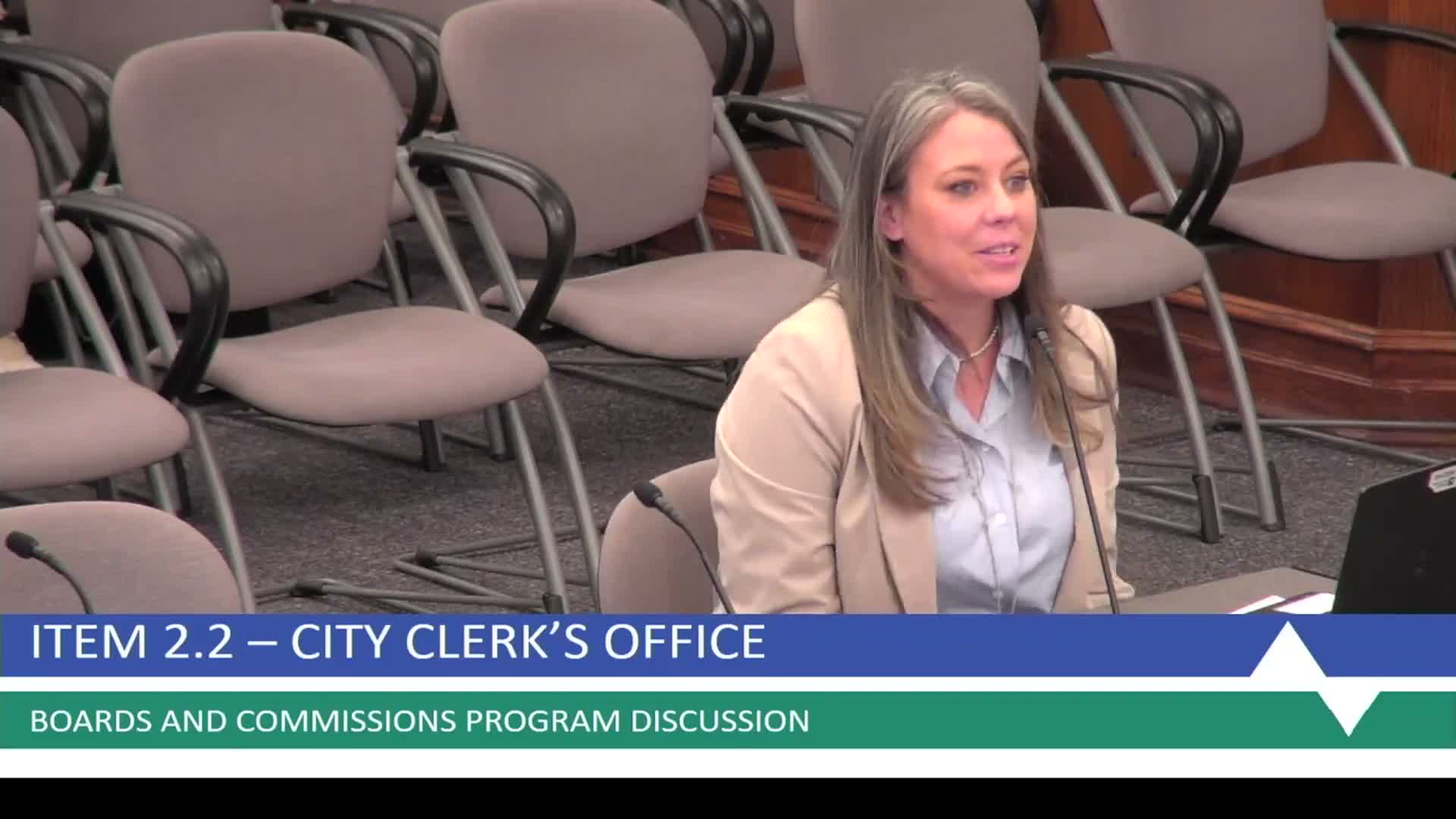
At the June 10 study session, City Clerk Ashley McDonald presented the findings from a multi-method review of Loveland's boards-and-commissions program that included surveys, staff-liaison interviews, community "super meetings" and an independent review. McDonald said the handbook generally performed well on clarity ("the handbook received approval in the eightieth percentile across all categories regarding clarity") but flagged recurring needs: clear definitions (board vs. commission vs. committee), consistent onboarding, more liaison and council training, better records management and a rubric to evaluate consolidation.
McDonald outlined steps staff will take: produce a chart of proposed red-line changes to the handbook, standardize application and interview questions and provide a rubric and process for council to consider consolidating or restructuring boards and commissions. She recommended piloting any expanded youth-membership approach rather than rolling a youth seat out across all 24 city boards and commissions immediately.
Julia Holland, the city's HR director, told council the state's youth-protection legislation and the city's risk assessment require careful implementation: "It is a high risk area for all organizations when you have youth programs and activities, and we take that very seriously," she said. Holland described a tiered approach to background checks and training based on the frequency and closeness of youth contact and said the city plans a citywide train-the-trainer rollout this fall.
Public commenters and volunteer leaders praised the review and urged clearer communications and stronger council engagement with volunteers. Bill Becker, an independent reviewer, said survey results and meeting notes showed perception gaps about whether volunteers feel heard. Christopher Seay, a current commission member, urged including commission chairs in executive recruitments for relevant departments.
Council direction and next steps: Councilors broadly supported training for council liaisons to be delivered at least on the election cycle (some favored annual study-session training or training at the council retreat), development of the rubric to assess consolidation, standardized background-check requirements for volunteers before fall recruitment, and a cautious, piloted approach to youth membership (several councilors suggested piloting youth seats on the Parks/Community Advisory Board or similar). Staff will return with the red-line chart, proposed rubric and implementation timetable.
Why it matters: Boards and commissions are a key channel for citizen input and technical expertise in local government. The clerk's recommendations aim to clarify volunteer roles, protect youth participants, reduce inconsistent practice across commissions and strengthen council accountability to volunteers.