Get Full Government Meeting Transcripts, Videos, & Alerts Forever!
Get email alerts on the Denver Start Contract topic
No spam. Unsubscribe anytime.
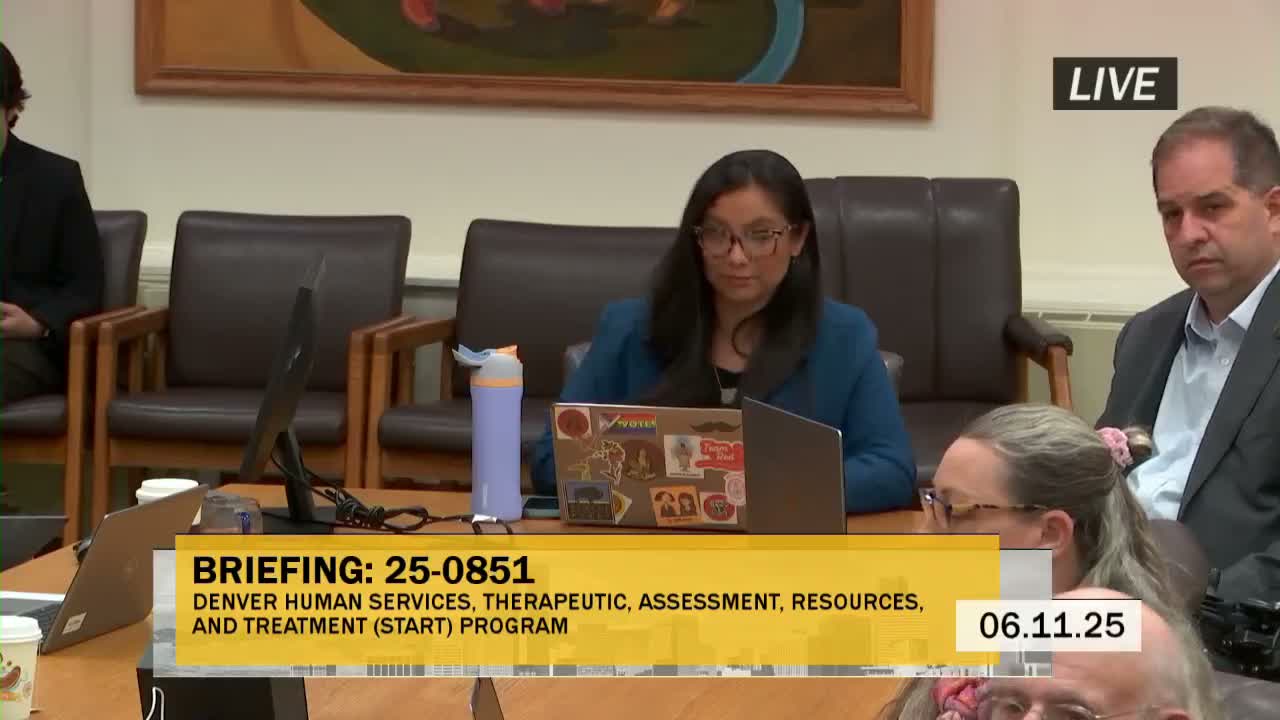
Council committee hears briefing on $6.4 million Denver START contract for IDD crisis services
Summary
Denver Human Services and Rocky Mountain Human Services briefed the committee on a $6.4 million contract (07/01/2025–12/31/2027) to operate Denver START, a certified crisis‑intervention program for people with intellectual and developmental disabilities; members pressed for enrollment targets and outreach plans.
Denver Human Services staff and Rocky Mountain Human Services briefed the Safety, Housing, Education and Homelessness Committee on June 11 about a new contract to operate Denver START, a certified crisis‑intervention and prevention program for people with intellectual and developmental disabilities (IDD) and co‑occurring mental‑health needs.
Mikaela Henig, program manager at Denver Human Services, told the committee the contract referenced in the briefing is Resolution "25 0 8 18" and covers a term from July 1, 2025, through Dec. 31, 2027, with a contract value of $6,400,000. Henig explained START (Systemic Therapeutic Assessment, Resources and Treatment) is a public‑health‑framed model that aims to reduce emergency‑service use by providing crisis planning, a 24/7 crisis line and community capacity building.
Henig said Rocky Mountain Human Services — Denver’s community‑centered board and the only certified START provider in Colorado — was competitively awarded the initial contract in 2021, launched services in September 2022, and has now achieved certification. Because Rocky Mountain Human Services is the only certified START provider in the state, the new contract will be executed under sole‑source terms for the certified model, Henig said.
Program details presented to the committee included roughly 16 full‑time Denver START staff, a 24/7 crisis line and evidence‑based practices intended to keep people at home during crises. Henig said START has served 193 Denver residents since launch, currently maintains an active enrollment around 98–100 people, and reported that 64 percent of START clients identify as people of color; the team also cited partnerships with 26 organizations and more than 50 community trainings.
Henig said available data show reductions in emergency‑service utilization for many START clients and that about 90 percent of callers to the START crisis line stay at home rather than require ambulance, police or emergency‑department transport. She said the city is contracting on a per‑client per‑month reimbursement model now funded fully by the Denver Mill Levy, and the contract includes monitoring of key performance indicators and a Health Management Associates cost‑savings analysis due later in the summer.
Councilmembers pressed for clarity on the universe of eligible clients and performance targets. Will Fenton and Rocky Mountain Human Services staff said Rocky Mountain previously reported serving about 6,000 people with IDD determinations in Denver, but Henig noted that the full population of residents who might benefit is not fully known and that outreach remains a priority. Councilmembers asked how many coordinators and what caseloads to expect; Henig said Denver START has about six coordinators and will monitor caseloads in line with National Center for START Services guidance (roughly 18–22 clients per coordinator).
Councilmember questions also probed state‑level pilots and potential overlap; Rocky Mountain Human Services deputies said state pilots ran in other regions but were not sustained and that Denver’s certified START program will be positioned to support replication elsewhere. Several councilmembers urged stronger outreach to families who may qualify but are not accessing services.
Action: Henig said Resolution 25 0 8 18 was placed on the committee’s consent agenda last week and has already moved forward; the committee did not take an additional vote during the briefing. Henig and Rocky Mountain Human Services staff committed to monitor enrollment, caseload targets and performance indicators under the contract and to provide a cost‑savings report later in the summer.
Ending: The committee closed the briefing and moved seven consent items to the full council without pulls; the START contract was presented as an executed consent action with ongoing monitoring commitments.