Get Full Government Meeting Transcripts, Videos, & Alerts Forever!
Get email alerts on the Affordable Housing Development topic
No spam. Unsubscribe anytime.
HOST presents $20M+ in development loans to create roughly 450 affordable units across seven projects
Summary
HOST described loan and grant commitments totaling just over $20 million to support about 450 affordable units across six-to-seven projects, including PSH, senior housing and a rental co‑op; council raised questions about unit mix, funding sources, co‑op oversight and landmark renovation costs.
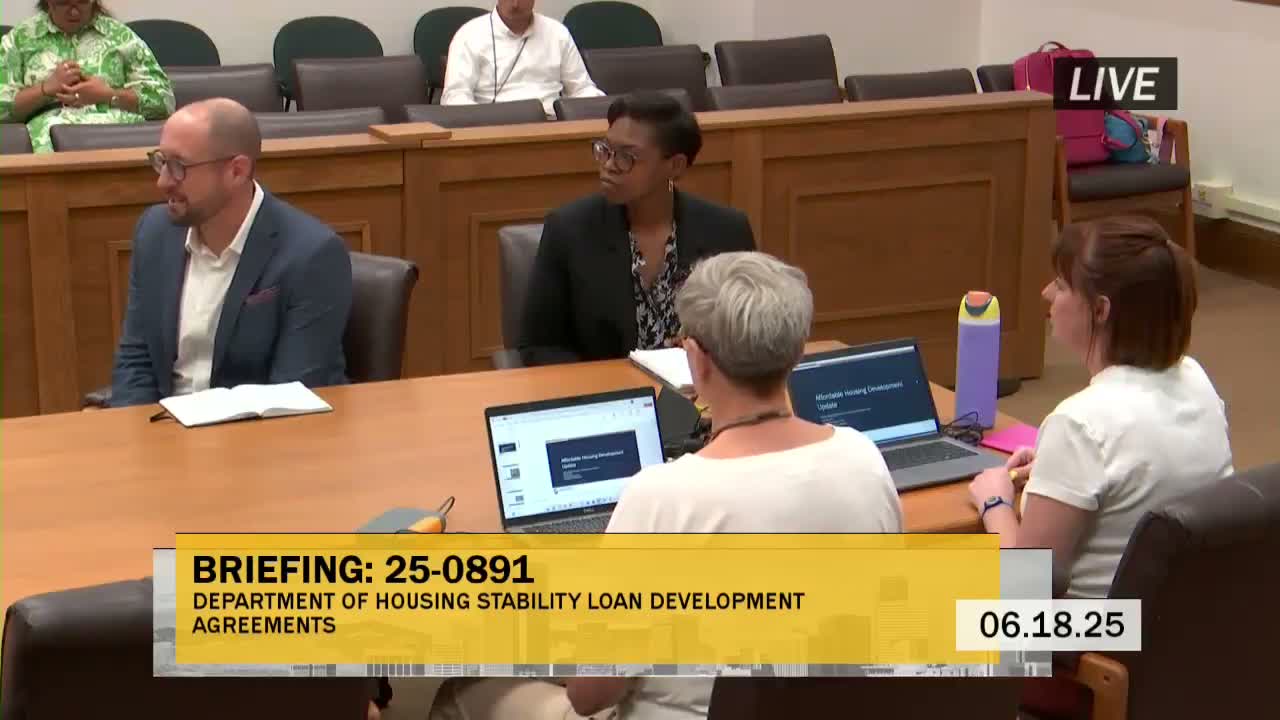
HOST briefed the committee on a package of Host loan and grant commitments intended to support roughly 450 affordable units across multiple projects and neighborhoods.
HOST said it has advanced six projects to the council process representing just over $20 million in investments and an approximate production of 450 affordable units. Projects presented included: Chrysalis Apartments (70‑unit permanent supportive housing in District 10) with a proposed $3,150,000 performance loan; Denver Dry Goods (historic rehabilitation downtown, 106 units) with a proposed $5,500,000 Host cash‑flow loan; I Love Senior Apartments (50 units near University of Denver) with a $2,250,000 loan; Legacy Homes (60 PSH units via Atlantis/Bayaud) with a $3,000,000 Host performance loan; 1315 North Logan (People's Mansion cooperative rental conversion) with a $1,020,000 acquisition grant; and Venez Senior Residences (phase 2, about 152 senior units) supported by two loans totaling roughly $5,830,000 across 4% and 9% tax credit structures.
Host staff explained key financial terms: performance loans (0% interest with long covenants) and cash‑flow loans (low‑interest terms), 60‑year affordability covenants on most projects, and a capital stack that mixes LIHTC equity, CHFA/CHFA products, state historic tax credits and city linkage or legacy funds. Host said these projects do not use general fund dollars and that the homelessness resolution fund, linkage fee revenue, CHFA and other special revenue sources provide the bulk of funding.
Councilmembers pressed Host on unit mix and family‑sized units. Councilmember Alvidrez and others noted many of the proposed units are studios or one‑bedrooms; Host said some projects are senior or PSH (which by nature tend to be studios or one‑bedrooms) and that the agency uses policy incentives (subsidy bonuses) to encourage three‑ and four‑bedroom units when feasible. Host also said that financing realities make larger family units harder to underwrite, and that a city housing needs assessment will inform future priorities.
The committee discussed the People’s Mansion cooperative model. Councilmember Amanda Sawyer expressed concern that Colorado lacks statewide regulation for housing co‑ops and asked whether Host could require governance and fair‑housing protections. Host said it will provide project documentation, operational manuals and compliance monitoring; the project team noted Boulder Housing Collaborative has operated similar rental co‑ops and will provide ongoing support.
Councilmember Kevin Flynn asked whether landmark preservation requirements raise renovation costs (window replication, period materials). Host acknowledged higher costs for landmark projects and offered to provide Flynn’s office with a cost breakdown.
HOST thanked council for support, and staff said projects are expected to close and begin construction in the coming weeks/months per each developer’s schedule. The briefing concluded and the committee adjourned.