Get Full Government Meeting Transcripts, Videos, & Alerts Forever!
Get email alerts on the Supplier Diversity Annual Report topic
No spam. Unsubscribe anytime.
Maryland PSC marks 30 years of supplier diversity as utilities report record diverse‑spend ratios
Summary
At a Public Service Commission supplier diversity hearing hosted by SMECO, staff reported a 36.89% diverse spend ratio for 2022 and utilities described new programs, increased tier‑2 tracking, and proposals for a uniform MOU and HUBZone reporting. Comcast earned the event’s gold star with 44% diverse spending.
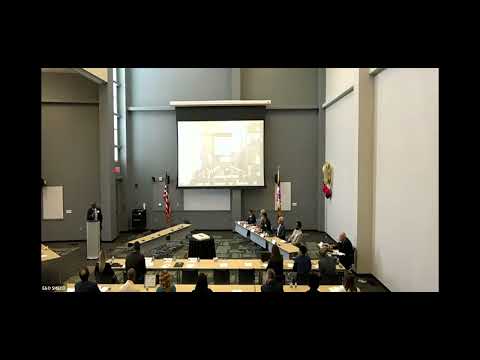
The Maryland Public Service Commission convened a 30th‑anniversary supplier diversity hearing at the Southern Maryland Electric Cooperative’s Hughesville facility on June 1, 2023, where staff reported that regulated companies collectively achieved a 36.89% diverse spend ratio in 2022 and many utilities described initiatives to expand supplier participation.
The PSC’s regulatory economist Anson Justy presented the 2022 Supplier Diversity Annual Report, saying the program—founded through early proceedings such as PC 52—has grown into a voluntary MOU framework and that the state’s overall diverse spend rose to 36.89% from 36.51% the prior year. Justy said nine of 16 active MOU participants exceeded the program’s 25% aspirational goal and that last year utilities spent roughly $1,500,000,000 with diverse businesses. “Maryland continues as a national leader in supplier diversity programs,” he said.
Utilities used the hearing to highlight practices intended to sustain growth. Comcast, the hearing’s gold‑star award winner, reported a 44% diverse supply percentage and described grant and small‑business support programs such as Comcast RISE. Exelon’s representatives said enterprise‑wide diverse spend totaled nearly $3 billion with Pepco and BGE each reporting DSRs above 40% for Maryland operations. Washington Gas reported record non‑gas diverse spend of 30.5% and described a Strive for 35 Fund to provide small loans to certified Maryland suppliers. SMECO, the host, said its procurement restructuring increased outreach and helped grow its diversity portfolio by more than 600% over the past decade.
Several smaller utilities and cooperatives—Chesapeake Utilities, Choptank Electric, Eastern Utilities and Potomac Edison—described progress in their service territories and noted geographic challenges on the Eastern Shore and in Western Maryland where supplier pools are smaller. Columbia Gas of Maryland officials emphasized supplier development and internal incentives to reach enterprise goals.
Verizon told the commission it would file a corrected 2022 report after discovering an undercount of diverse vendors; the company said the corrected Maryland diverse spend would rise from an originally reported 16.7% to about 26.5% and raised its 2022 diverse‑vendor total to roughly $60.9 million. Several utilities highlighted ongoing efforts to improve tier‑2 reporting, data automation and prime‑contractor engagement to expand subcontracting to certified diverse firms.
Why it matters: the DSR is the program’s primary metric and is used to track whether utilities’ procurement shares reflect Maryland’s diversity goals. Commissioners and legislative guests repeatedly said that tracking and supplier‑development work are essential as the state pursues larger energy transitions, where new projects (offshore wind, broadband deployments under federal programs) will generate large procurement opportunities.
The commission did not adopt substantive policy changes at the hearing but asked staff to consider signatories’ proposed uniform MOU and flagged HUBZone inclusion as an item for future consideration. The PSC’s staff and the Maryland Utility Forum will provide further analyses before the commission issues a determination later in the summer.
Quotes: “We exceeded the program goal this year with a 36.89% diverse spending ratio,” Anson Justy said. Comcast’s John Conwell highlighted supplier development programs and warned that supplier composition can change with corporate ownership shifts. Michelle Burnett of the HUBZone Contractors National Council urged the commission to adopt HUBZone tracking, arguing it would prioritize community job creation.
Next steps: the commission will review the Forum’s proposed standardized MOU and consider comments on category additions (including HUBZone). The PSC also initiated a separate rulemaking at the same hearing to rename the supplier diversity hearing in honor of former Commissioner Harold Williams (see separate article).