Get Full Government Meeting Transcripts, Videos, & Alerts Forever!
Get email alerts on the County Budget topic
No spam. Unsubscribe anytime.
Columbia County officials warn of looming $2M shortfall; committee looks at gas tax, fees and cuts
Summary
Budget committee members and staff told commissioners June 10 that Columbia County faces a likely structural shortfall in fiscal year 2026–27 and discussed a mix of small new fees (including a proposed 2% gas tax), better use of county assets, and personnel reductions to close the gap.
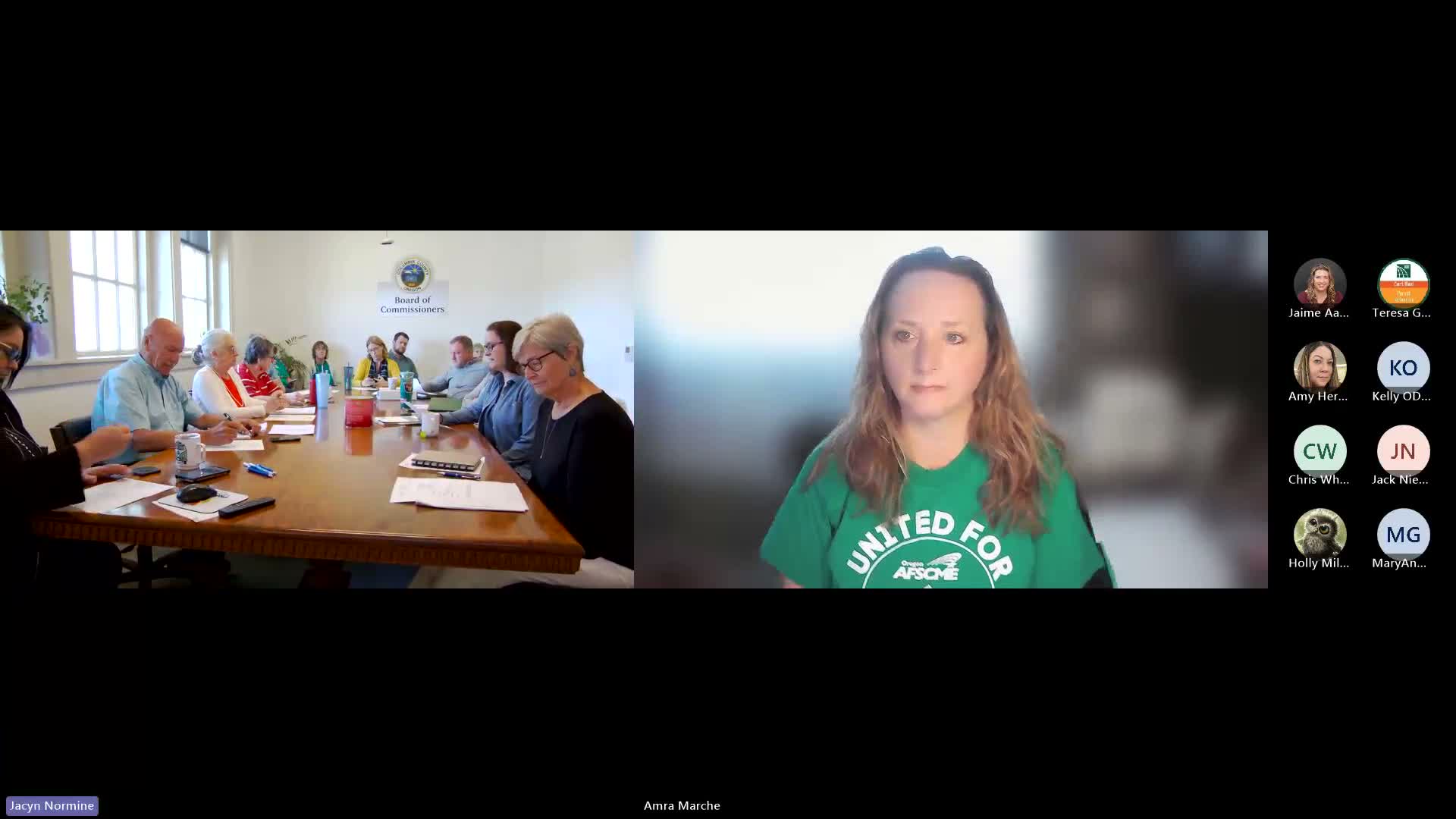
Columbia County commissioners and budget committee members met June 10 at the Johnbound Building to discuss options to close an anticipated general-fund shortfall for fiscal year 2026–27, with committee member Paul Langner warning the county can make it through 2025–26 but not 2026–27 without significant action.
"This is a slow moving train wreck," said Paul Langner, a budget committee member, urging the county to begin implementing revenue and cost changes before September to avert deeper cuts.
Pam, a finance department staffer, told the committee she is preparing a projected general-fund budget for 2026–27 so members can see the size of the shortfall and prioritize responses. "We need to know what kind of shortfall we're looking at, not this budget year, but the next budget year," Pam said as staff work to assemble the numbers.
Committee members discussed a portfolio of smaller revenue options rather than a single fix. One proposal raised was a 2% county gas tax, which a participant estimated would yield roughly $350,000 annually based on roughly 17 million gallons of fuel sold in the county last year. Other ideas included targeted tipping fees for waste facilities, modest commercial-vessel moorage or response fees to support marine patrol, assessing royalties or lease indexing on county-managed natural-resource assets, and reviewing county-owned small parcels for potential sale or lease.
Speakers also urged the county to examine whether fees or leases are indexed to an appropriate measure; some argued a construction-cost index better tracks county expenses than the consumer-price index because construction and materials costs have risen faster than consumer CPI.
Several members raised revenue tools that would likely require voter approval — such as levies, a service district or larger payroll or local-business taxes — and cautioned those options take time. Commissioners noted furloughs already in place are a short-term measure "to give us some time" while staff and department heads analyze longer-term options.
Staff presented personnel cost context: since 2019 the county has increased full-time equivalents by about 11.5%, while salary and benefit costs have risen by roughly 78% over the same period, underscoring the pressure on the general fund. Commissioners and budget committee members repeatedly returned to personnel as the largest single budget driver and discussed attrition, shared services and targeted position reductions as potential tools.
The board also reviewed parts of Columbia County’s strategic plan (economic development, transient lodging tax, updated system development charges for parks and roads, and vehicle registration fees) as items that could be pursued in coordination with the longer-term revenue strategy. Staff noted some ARPA funds were used for other purposes and cautioned against relying on one-time funds to plug structural gaps.
The commission scheduled public budget hearings for the next day — one at 9:30 a.m. and another at 6 p.m. — to collect public comment and proceed with the work of refining projections, meeting with department heads, and developing a package of revenue and expenditure options. The commission did not take a final vote on any new revenue measure during the meeting.
Next steps: staff will provide the 2026–27 projections and additional answers to the committee’s specific questions; commissioners will meet with department heads and return to the committee with a prioritized set of options that may include a mix of fees, modest new taxes subject to voter approval, and targeted personnel changes.