Get Full Government Meeting Transcripts, Videos, & Alerts Forever!
Get email alerts on the Special Education topic
No spam. Unsubscribe anytime.
Pulaski County school officials outline $1.17 million special‑education grant request, plan service expansions
Summary
District staff told the school board the special‑education annual plan affirms ongoing services and requests $1,170,000 in federal 6‑11 grant funding (plus a $36,000 6‑19 award) to support paraprofessionals, specialist salaries and contracted services; the plan returns next month as an action item for submission to the Department of Education.
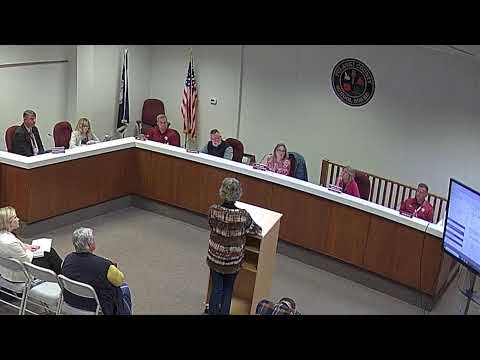
Pulaski County School Board members heard a detailed presentation on the district’s special‑education annual plan and two federal grant requests that staff said are essential to sustaining services for students with disabilities.
Dr. Polchow, presenting the plan, said the large federal grant application (the “6‑11” program) requests $1,170,000 to cover salaries, benefits and services. "The total request is $1,170,000," she said, and staff noted roughly $580,000 of that would be allocated to personnel — about 20 paraprofessionals and six professional staff positions. She described the grant as supporting extra‑duty wages, supplemental services, professional development and some purchase services such as speech, physical therapy and vision services that are sometimes contracted out.
The district also plans to apply for the smaller 6‑19 grant ($36,000), which Dr. Polchow said goes entirely to salaries for preschool special‑education teachers who hold dual ECSE/VPI certification.
Board members were told the district serves roughly 680 students through special‑education teachers and case managers and that six speech‑language pathologists are currently employed. Dr. Polchow said about 28 students are placed out of district, including three in private residential facilities and 25 in private day schools. She also described maintenance‑of‑effort rules that require the district not to reduce its spending on special education year to year unless an exception applies.
The presentation described planned service expansions: more co‑teaching and “high‑leverage” instructional practices, creation of resource classrooms for grade‑level content delivered in a special‑education setting, and possible re‑establishment of self‑contained classrooms at elementary and middle schools for students with significant cognitive or behavioral needs. She said classroom cap recommendations (14 by policy, but practically fewer) and the use of BCBA (board‑certified behavior analyst) supports would guide placements.
Dr. Polchow also outlined practical items covered by the grant request: replacement cycles for laptops and iPads for special‑education staff and modest telecommunications devices so community‑based teachers don’t use personal phones for work. Staff said the annual plan’s implementation narrative will be submitted to the Virginia Department of Education in May and will return to the board next month as an action item for formal approval.
Board members asked clarifying questions about the narrative and pages in the packet; Dr. Polchow confirmed more detail is available in the plan’s implementation narrative and budget breakdown. The item will be listed as an action item at the board’s next meeting to permit timely submission to state authorities.