Get Full Government Meeting Transcripts, Videos, & Alerts Forever!
Get email alerts on the Resource Adequacy topic
No spam. Unsubscribe anytime.
Maryland regulators convene resource‑adequacy conference as officials press for storage, demand response and clearer PJM data
Summary
The Maryland Public Service Commission convened a technical conference where commissioners, state officials and grid operators discussed near‑term storage procurements, demand‑side options and the need for better PJM transparency to address tightening capacity and rising electricity costs.
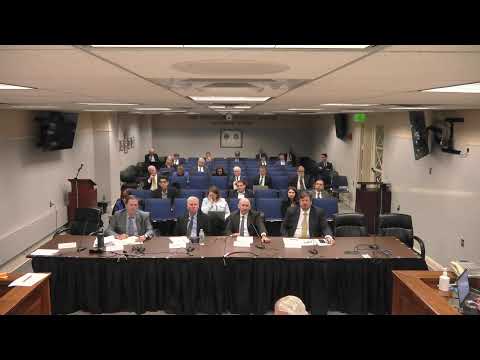
The Maryland Public Service Commission on Wednesday convened a Resource Adequacy Technical Conference to solicit recommendations for keeping electricity safe, reliable and affordable as demand grows and generation retires.
Chair Hoover opened the day by saying the conference aims to gather “advice, suggestions, and proposals” from regulators, system operators, industry and public‑interest groups ahead of the legislative session. Paul Pinsky, director of the Maryland Energy Administration, told the panel “we do not take reliability lightly. People expect to turn on their lights, so we need both the generated power and the infrastructure to convey it.”
Panelists described a mix of near‑term and longer‑term options. Delegate Lorig Charcutian outlined a proposal filed in comments that would allow the state to quickly procure storage: “There’s enough storage that even if we built about a third of it, I think it would go a long way and it could come online quickly and certainly more quickly than any gas plant could,” she said. Multiple speakers called battery storage a “no‑regret” resource that can be deployed faster than new thermal generation.
PJM Interconnection and independent experts testified that the region faces growing risks driven by data‑center load growth, electrification and retirements of conventional plants. PJM’s Stu Bressler said the reserve margin is eroding and urged an “all‑of‑the‑above” approach that balances market design changes with targeted procurements, while warning that policy actions must not discourage private investment.
Office of People’s Counsel staff and other consumer advocates emphasized near‑term solutions that protect ratepayers. Phil Sussler said the last capacity auction exposed design flaws that produced unusually large payments across the PJM footprint and noted a pending complaint at FERC.
Speakers and commissioners repeatedly urged more and clearer data from PJM and transmission owners about large‑load forecasts and which projects in the interconnection queue are truly ready to be built. Officials said the lack of transparency complicates decisions about whether to rely on market fixes, state procurements or utility‑driven projects.
Several presenters recommended actions the commission or legislature could pursue quickly: accelerate procurement of transmission‑connected and distribution storage that is already advanced in the PJM queue; expand demand‑response and time‑of‑use programs to reduce peak demand; and pursue grid‑enhancing technologies and targeted transmission upgrades where they’re most cost‑effective.
Panelists cautioned against rushing into broad utilities‑owned generation without clear legal and cost protections for ratepayers. Delegates and commissioners discussed legislative options that would authorize targeted procurements or allow the PSC to require utilities to act in narrowly defined reliability circumstances, but legal advisers said the details would need careful drafting to avoid preemption or costly outcomes for consumers.
The commission directed staff to consider next steps, including how to obtain better PJM data and whether targeted procurements for storage or other near‑term resources are warranted. The conference continued through successive panels; commissioners said they will use the input to help shape policy recommendations to the General Assembly.
The commission did not take formal action at the conference; it adjourned after five panels but signaled plans for follow‑up work with staff, utilities, PJM and state lawmakers.