Get Full Government Meeting Transcripts, Videos, & Alerts Forever!
Get email alerts on the Transmission Relocation topic
No spam. Unsubscribe anytime.
PSC grants BGE waiver to relocate circuits ahead of Amtrak tunnel work, with conditions
Summary
The Maryland Public Service Commission approved Baltimore Gas & Electric Co.’s request to waive the usual CPCN requirement and move two transmission circuits from the Central Transmission Tunnel to overhead lines before Amtrak rebuilds the BNP tunnel, subject to reporting and cost‑disclosure conditions from staff.
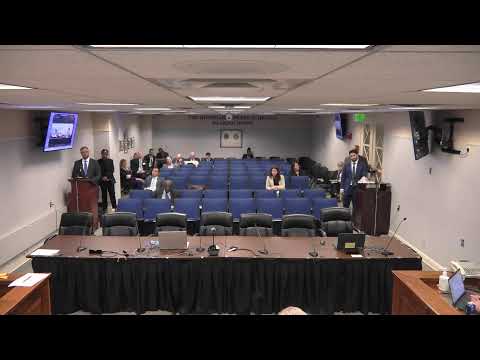
The Maryland Public Service Commission voted Dec. 11 to grant Baltimore Gas & Electric Co. (BGE) a discretionary waiver of the certificate of public convenience and necessity requirement so the utility can relocate two transmission circuits out of the Central Transmission Tunnel (CTT) into new overhead towers ahead of Amtrak’s Frederick Douglass Tunnel replacement.
Staff presented the waiver request and recommended approval under Public Utilities Article §7‑207(b)(3)(ii), saying the work is related to existing overhead transmission lines and that federal preemption under 49 U.S.C. §24902(j) remained an alternative but a state waiver would allow the commission to impose conditions. Staff noted Amtrak has scheduled demolition and replacement of the BNP tunnel beginning in early 2026 and that BGE is contractually required to vacate Amtrak’s right‑of‑way on request.
Roger Austin, who presented the item for staff, told commissioners the project team reviewed six alternatives and concluded that the proposed overhead relocation was the least costly and fastest way to maintain electrical service and avoid overloading remaining circuits. Staff said retiring the CTT circuits without replacement would risk outages and overload 4 other circuits by roughly 5%–20% above emergency ratings.
Joel Michel, representing BGE, said the company will relocate the lines at the same nominal voltage (listed in filings as 115 kV) and has used the relocation opportunity to increase line carrying capacity and efficiency. "We have, in fact, used this opportunity to increase the efficiency of those lines," Michel said, adding that BGE does not plan further upgrades to those specific spans within the next 10 years.
Power Plant Research Program staff said they would not file conditions because their authorizing statute ties conditions to CPCNs, but PPRP staff indicated they had no substantive objection after a limited review and expected permits to address environmental and socioeconomic issues.
Commission staff recommended two standard post‑approval conditions: that BGE notify the commission when the reconfigured circuits are placed into service and that BGE file the as‑built cost of the reconfigured circuits and justify any significant difference from the $28,000,000 estimate included in the waiver request. Commissioners recorded support for those conditions during debate.
A motion to grant the discretionary waiver under Public Utilities Article §7‑207(b)(3)(ii), subject to the staff‑proposed conditions, passed by recorded voice vote. The commission’s order will include the staff conditions and any other findings the commissioners adopt.
What happens next: BGE must file the as‑built costs and notify the commission when the reconfigured circuits are energized; staff and the commission will monitor those filings per the condition the commission adopted.