Get Full Government Meeting Transcripts, Videos, & Alerts Forever!
Get email alerts on the Subdivision topic
No spam. Unsubscribe anytime.
Board approves Montclair Avenue minor subdivision; DEP monitoring wells remain in place
Summary
The Zoning Board approved a minor subdivision to divide one oversized commercial lot into two tax lots at 30 Montclair Avenue, preserving monitoring-well obligations from a former PSE&G site and requiring cross-easement documentation and minor plan clarifications.
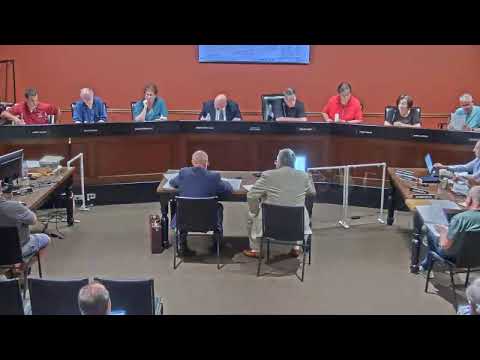
The Pompton Lakes Zoning Board of Adjustment voted June 25 to approve a minor subdivision to create two tax lots at 30 Montclair Avenue, a property long associated with former utility uses, subject to cross-easement language and engineering clarifications. Bruce Whitaker, counsel for the applicant 30 Montclair Avenue LLC, said the proposal would split the roughly 67,000-square-foot lot into two parcels, each to retain an existing principal building and parking that, in the applicant's view, would function independently.
Why it matters: The site was previously the subject of a 2016 board approval and contains monitoring wells tied to prior contamination and oversight by the New Jersey Department of Environmental Protection (DEP). The applicant's engineer, Tibor Letigin of Conklin Associates, testified there are monitoring wells across both proposed lots and that ongoing DEP monitoring requirements would continue unchanged by the subdivision.
Board members discussed legal and planning implications of dividing a previously approved lot, including potential precedent and the need for cross-easements to preserve the current shared access and circulation across the site. Counsel and the applicant's engineer said no physical changes to the buildings or parking are proposed and that required engineering clarifications and exhibit updates could be completed; they also confirmed that existing DEP monitoring obligations and wells would remain in place and be unaffected by the lot split.
A resident who lives across the street testified in favor of the application, saying the property has been maintained and improved under current ownership. The board emphasized that cross-easements and deed restrictions would be part of the subdivision filing to preserve shared ingress/egress and prevent future fencing or other actions that would block cross-access.
The board voted to approve the subdivision with contingencies that the applicant provide the easement language and plan clarifications requested in municipal engineering reports; counsel was asked to draft the formal resolution for adoption at a later meeting.
The approval preserves the site's ongoing environmental-monitoring obligations to DEP and imposes no immediate change to monitoring or remediation activities noted in the record.