Get Full Government Meeting Transcripts, Videos, & Alerts Forever!
Get email alerts on the Land Use topic
No spam. Unsubscribe anytime.
Pompton Lakes board OKs landscaping/outdoor-storage variance with DEP approvals, limits on vehicles
Summary
The Pompton Lakes Zoning Board approved a use variance for a landscaping business to allow limited overnight outdoor storage and related bulk variances, contingent on DEP flood-hazard approvals, an emergency vehicle-evacuation plan and limits of six overnight vehicles and three trailers.
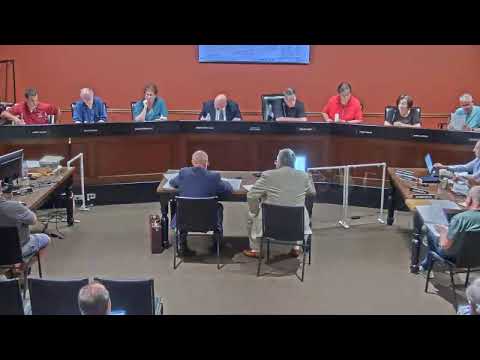
The Pompton Lakes Zoning Board of Adjustment voted June 25 to grant a use variance allowing a landscaping business to continue limited outdoor overnight vehicle and trailer storage at a multi-building site, subject to conditions including confirmation of DEP flood-hazard approvals and an evacuation plan for vehicles in flood events. Harold Peacock, representing the applicant, told the board the application is a continuation and that the plan had been revised to address most engineering comments.
Board members focused much of their questioning on flood-hazard mapping and whether portions of the lower parking area fall inside the FEMA-designated floodway. The applicant's engineer, identified in testimony as Mister Wiseman, said the plan shows the FEMA floodway and that certain activities may qualify under DEP "permit by rule" items 50 and 51. He told the board the applicant would pursue an applicability determination from the New Jersey Department of Environmental Protection (DEP) if the board desired and agreed that any required outside permits would be the applicant's responsibility.
Why it matters: Much of the contested parking lies near the stream and board members warned spaces in the lower lot could be washed away in a major flood, potentially damaging public infrastructure downstream. Neighbors said cars left in the lower lot could be swept into the stream during heavy rain and urged a plan that would move vehicles ahead of flood events.
The board required a set of conditions on approval. Those conditions recorded on the public record include: confirmation of DEP applicability or permits before construction or changes proceed; a prohibition on storing construction materials or tools outside in the floodway (the applicant agreed that only vehicles and trailers would be stored outside); preparation and adoption of an emergency evacuation plan to move vehicles in a flood event; and compliance with review letters from the municipal engineer and planner. The applicant agreed to limit overnight outdoor parking to six vehicles and up to three trailers.
Board members also discussed multiple bulk variances tied to the site: a 22.5-foot drive aisle where 24 feet is required, parking setback variances, and screening/setback items. The applicant's representative said the narrower aisle has operated for years and that widening it would cause additional disturbance; the board accepted that variances are necessary and conditioned approval on the engineering clarifications and the DEP determinations.
Public comment included a neighbor, Mike Sarah of 41 West Lynx, who said he was not opposed but asked whether the stream is a trout stream and how the applicant would remove vehicles during storms. The applicant's team said it would provide an environmental consultant report if needed and would submit additional documentation to the board.
The motion to grant the variances passed on a roll-call vote recorded on the public record (board members voting yes and no recorded in the minutes). The board asked counsel to prepare a draft resolution reflecting the conditions for review and formal adoption at a subsequent meeting.
The approval does not become effective until the applicant provides the required DEP documentation and the resolution is finalized and memorialized by the board. If DEP or other agencies deny necessary permits, the board directed the applicant to return to propose alternate remediation or design changes.