Get Full Government Meeting Transcripts, Videos, & Alerts Forever!
Get email alerts on the Pilots topic
No spam. Unsubscribe anytime.
Town hears Phoenix Advisors' overview of PILOT agreements and negotiation trade-offs
Summary
Phoenix Advisors explained payment-in-lieu-of-taxes (PILOT) agreements, statutory tests (10% of gross revenue or 2% of project cost), phased statutory minimums, annual audit/true-up rules, and how municipalities negotiate protections and community benefits. Council asked about school, police and infrastructure impacts.
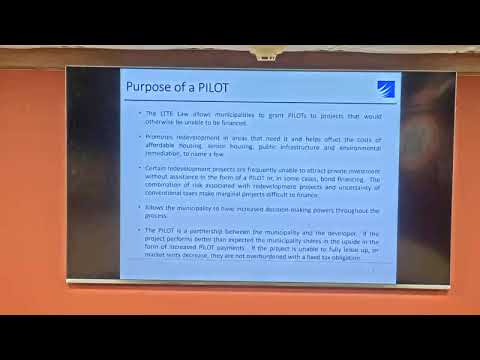
Anthony Inverso of Phoenix Advisors told the Pompton Lakes Borough Council on July 17 that PILOTs — payment in lieu of taxes — are a common tool to encourage redevelopment of underused or hard‑to‑finance sites. "It stands for payment in lieu of taxes," Inverso said, and he outlined the main statutory calculations and protections available to municipalities.
Inverso explained two statutory tests the long‑term tax‑exemption law provides: a typical negotiated approach based on a percentage of annual gross revenue, "the minimum pilot under the long term tax exemption law is 10% of annual gross revenue," and an alternate formula set at 2% of project cost, which advisers said is rarely used because it often produces very large immediate payments that developers reject. He described common practice in New Jersey where municipalities negotiate growth steps and minimums over a 30‑year PILOT term; the law allows timing up to 35 years to account for project build‑out.
The consultant highlighted statutory phased‑in minimums that may require higher payment shares in later years (examples discussed included 20%/40%/60%/80% bands over the PILOT schedule) and said annual audits and a true‑up process are standard: developers provide an audit (typically due by March 31) so the borough can reconcile actual revenue and adjust billing. Inverso also noted a county share is mandated by law: "You're required by law to make a 5% payment. 5% of the pilot is paid to the county," and said school districts normally do not receive PILOT revenue unless the municipality negotiates a separate sharing agreement.
Council members asked whether PILOT revenues account for increased municipal costs such as police, fire and school services. Inverso said such costs are considered during evaluation and negotiation but are typically not rolled into the annual service charge itself; where a project will materially increase costs (for example by bringing many new schoolchildren), jurisdictions have negotiated revenue‑sharing or upfront contributions to offset those impacts. He also emphasized the advisory and analytic role his firm plays: assessing project returns, proposing counteroffers, and helping ensure a proposed PILOT does not leave the borough worse off than regular taxation.
The presentation concluded with council questions about suitable project sizes and whether small projects merit PILOTs; Inverso said the analysis is case‑by‑case and that larger projects are more likely to justify long terms and more substantial incentives. He cautioned that PILOTs should be targeted to designated redevelopment areas rather than applied town‑wide.
The council did not take a policy vote on PILOTs at the July 17 meeting; the session was for information and questions, with follow‑up analysis suggested before any formal agreement is negotiated.