Get Full Government Meeting Transcripts, Videos, & Alerts Forever!
Get email alerts on the Attendance topic
No spam. Unsubscribe anytime.
Caroline County Public Schools reports improved attendance and outlines interventions to cut chronic absenteeism
Summary
Midyear data presented Feb. 11 shows a district attendance rate of 93.8% (midyear) and 164 students classified as severely chronically absent (~4%); speakers said tutoring, Saturday school and targeted family outreach funded partly by the All In grant are helping reduce absences.
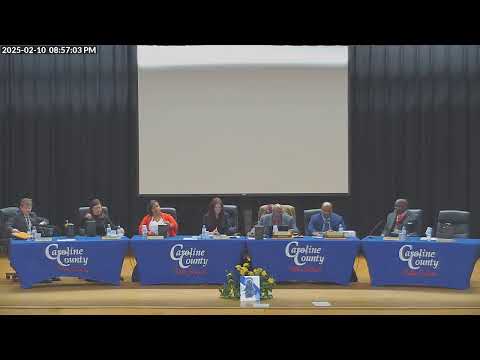
Caroline County Public Schools presented a midyear review of attendance and student-performance metrics at its Feb. 11 board meeting, reporting gains in districtwide attendance and renewed focus on interventions for chronically absent students.
District presenters said the ATTEND program’s midyear snapshot (data run Feb. 4) shows a district attendance rate of 93.8 percent and an average student absence of just over six days so far this school year. Presenters said 164 students — about 4 percent of the active student population — were classified as severely chronically absent. Program staff attributed progress to a suite of tactics: targeted automated attendance communications, parent conferences, weekly school attendance teams, morning/afternoon tutoring, Saturday school and individualized support plans.
“Across the district, on average, we’re seeing about 297 students out on a given day,” Julie Deb Headling said during the presentation, noting that on high-absence days the number can reach the mid-300s. Headling also reported over 10,000 pieces of communication to families since the partnership began and a 66 percent “save rate” for students who had been flagged for truancy or excessive excused absences.
Board members asked whether the division tracks reasons for absence; administrators said codes distinguish doctor notes from parent notes but that the district does not systematically record medical or nonmedical reasons beyond those broad codes. “If we get a doctor’s note, the code will indicate it’s a legal document,” the presenter said; parent notes are coded differently but do not capture diagnostic detail.
Discussion turned to sustainability of grants that fund attendance work. Board members and staff described All In funding (year two, carried into FY26) as totaling approximately $1.8 million and divided into three buckets, including Virginia Literacy Act supports at the elementary level and accelerated-learning tutors, both of which the district said are contributing to improved attendance and learning outcomes. Staff said quarterly data updates will be added to the board’s Friday communications and that principals are using projection tools (VVAS) and principal roundtables to refine school-level forecasts ahead of statewide assessments.
Administrators cautioned that illness, weather and enrollment changes can reduce winter testing samples and that continued gains will depend on sustained funding, family engagement and retention of high-quality instructional staff. They also emphasized that attendance gains create downstream benefits for mastery measures and readiness under Virginia’s new performance framework.
The board did not take formal action on the ATTEND program at this meeting; members asked staff to return with quarterly and school-level reporting so the board and community can monitor trends through the spring.