Get Full Government Meeting Transcripts, Videos, & Alerts Forever!
Get email alerts on the Economic Development topic
No spam. Unsubscribe anytime.
Smithville aldermen agree to streamline EDC, keep alderman liaison and lean on county and chamber partners
Summary
After reviewing a staff memo and partnerships, the Board of Aldermen directed staff to update the EDC ordinance to shift core functions to county and chamber partners and retain an alderman representative to report back on economic development activity.
Smithville—oard of Aldermen members signaled broad support on Monday to scale back the city—conomic Development Committee (EDC), rely more on the Smithville Area Chamber of Commerce and Clay County Economic Development Council for recruitment and retention, and keep a single alderman liaison to the county EDC.
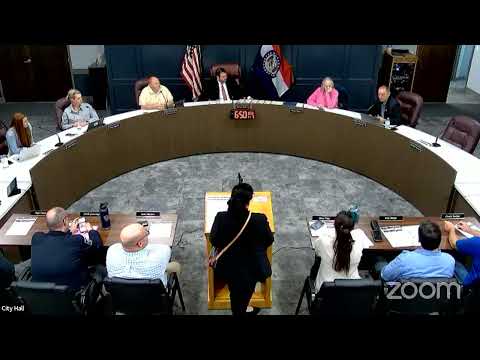
"We only have one item on the agenda for the work session," Speaker 1 said at the start of the meeting, introducing the general discussion of the EDC and a staff memo summarizing recent EDC activity and partnerships.
City staff member Gina summarized the memo and described the EDC s focusing on marketing materials for tourism and future development, quarterly visitor-data updates (via Placer AI if the board desires), and ongoing partnerships. "We use them a lot for tourism and marketing efforts, for the downtown," Gina said of the Smithville Main Street District.
Board members raised recurring concerns about the committee s currently constituted. Speaker 1 recalled the last ordinance update in May 2019 expanded eligibility for EDC membership beyond residents and said the group has struggled to fill seats and exercise budget authority. "There's not really a budget that they control," Speaker 1 said, arguing some functions could be absorbed by county or chamber partners.
One alderman who had attended a Clay County EDC event recommended keeping an alderman representative rather than maintaining a standalone advisory committee. "My recommendation ... is that we update our ordinance to—e not necessarily meeting as an advisory committee, but we would still have a board of aldermen representative, that would be able to update the board, when there's key issues that happen through Clay County EDC," Speaker 4 said, noting county membership can provide access to programs such as EDPROS and the Kansas Area Development Council (KADC), which was described as costing about $10,000 a year through certain channels.
Several members said the chamber is better positioned for business retention and workforce outreach. Erica, the chamber representative, confirmed the chamber now has a full-time director and that chamber lunches draw roughly 50—0 attendees compared with very low EDC meeting attendance. "Every now and then, we have somebody that's like, no. I'm good," Erica said of business outreach; city staff reported completing about nine business retention visits since January and aiming to reach more before year-end.
Questions about measurement and outcomes surfaced during the discussion. Speaker 2 asked staff to ensure EDC metrics align with the city ims, including the "quality of jobs" produced and whether outreach is effectively driving business recruitment or retention. Speaker 2 also suggested exploring partnerships with the school board to help retain graduates locally.
After the discussion the board coalesced around a narrower role for the EDC and direction for staff. Speaker 1 asked whether anyone opposed the plan; with no objections, Jeanne (city staff) was told she had the direction she needed to prepare ordinance redlines and next steps.
The work session ended without a formal ordinance vote; the board moved to adjourn by voice and approved the motion. The direction to staff is procedural: the board asked staff to draft proposed ordinance changes and next steps for formal consideration at a future meeting.
What happens next: Staff will prepare proposed ordinance language or a redline to present to the board for a formal action at a future meeting; no formal ordinance change or final vote occurred during the work session.