
Culpeper council adopts amendment to inoperable-vehicle code after debate over winterization exemptions
Get AI-powered insights, summaries, and transcripts
Subscribe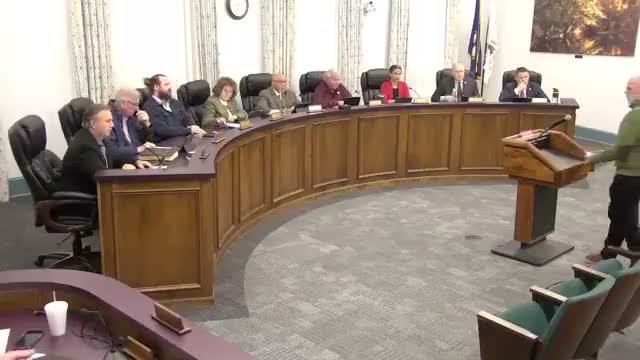
Summary
The Town of Culpeper adopted ordinance O-2024-010 amending Chapter 20 of the town code to codify fines for inoperable motor vehicles. Residents raised concerns about winterizing trailers; staff said enforcement is complaint-driven and the fine is $50 per day.
The Town of Culpeper council voted to adopt ordinance O-2024-010, amending Chapter 20 of the town code to codify the town’s practice for dealing with inoperable motor vehicles and to formalize civil penalties.
Gerard Weatherby of Elmore Drive urged the council during public comment to carve out an exception for seasonal campers, saying his three-season camper has its tires removed during winter storage and that, "if I did that, then I would be technically in violation of the ordinance as I understand it," because of wording he had seen in the local press. He asked the council to "rethink the wording" so such winterization would not constitute a violation.
Andrew, a town staff member who presented the amendment, said the ordinance is intended to reflect long-standing practice and to make enforcement more defensible in court. "It's a $50 per day fine that's associated with it," he said, adding that most cases are resolved well before fines are assessed. He described enforcement as complaint-based: zoning staff respond to complaints from adjoining property owners, inspect the site, and typically begin with a courtesy notification and efforts to remediate (for example, suggesting a car cover) before issuing a notice of violation.
During debate a council member proposed amending the ordinance so penalties would apply only when two or more vehicles met the standard; the amendment was offered from the floor but failed to carry. A roll-call vote followed on the original motion to adopt O-2024-010; multiple council members voted "Aye" and at least two recorded "No" votes, and the motion carried.
Council and staff emphasized the town’s stated enforcement objective is compliance rather than punishment and described a graduated approach: complaint intake, on-site inspection, courtesy notification, a formal notice of violation if an owner does not respond, and legal action as a last resort. Staff said temporary measures that demonstrate operability at the time of inspection—such as placing tires back on a trailer or covering a vehicle—would generally avoid a finding of inoperability.
The ordinance was presented as an update to clarify fines and legal defensibility rather than a new code; staff noted in discussion that the town has enforced similar provisions since the early 1990s. The council did not adopt a permanent exception for seasonal tire removal; council members instead relied on the complaint-driven enforcement process and the town’s ability to consider context during inspections.
The ordinance is effective as adopted; staff said standard enforcement steps will apply and that they would continue outreach to residents about how complaints and inspections are handled.