Get Full Government Meeting Transcripts, Videos, & Alerts Forever!
Get email alerts on the Disaster Recovery topic
No spam. Unsubscribe anytime.
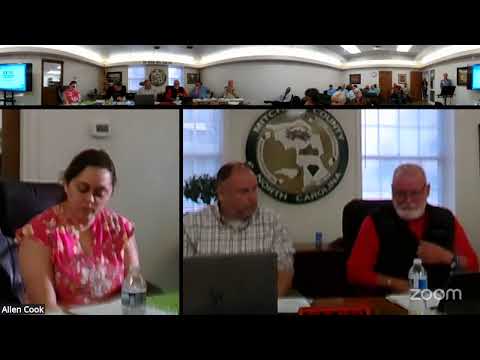
Mitchell County officials urge faster release of storm recovery funds, warn of heightened fire risk
Summary
Commissioners and county staff told visiting officials that allocated state and federal recovery money remains unusable without final language, urged faster release, and pressed for fire mitigation, private-bridge reimbursements and small-business support.
Mitchell County commissioners and staff pressed state and federal partners Thursday to speed the release of post-storm recovery funds and warned that large amounts of downed timber and debris are raising near-term fire risks.
Commissioner Blevins told the assembled group that many residents still lack access to their homes and that private bridges remain essential for people across the county. Commissioner Pittenger said roughly “$2,000,000,000” is sitting in channels in Raleigh that could be routed to mountain communities but needs help to move through state and federal steps so residents can apply for relief.
County Manager [unnamed] asked for clearer templates and definitions from federal agencies so the county can process FEMA or other reimbursements more quickly for private-bridge work and public debris removal. The manager offered a working estimate that combined waterway debris, private-road debris removal and rebuilds could total in the neighborhood of $250–300 million, a figure presented as an approximate aggregate estimate.
Speakers also said the storm left large amounts of standing and downed timber. One commissioner warned that the wood on the ground will dry and raise the county’s fire risk as weather warms, and they urged additional resources for fire mitigation and for volunteer fire departments’ ability to access remote properties.
Officials discussed a North Carolina Department of Transportation study previously presented on reopening Cox’s Creek and argued that reopening that thoroughfare through McDowell County could improve supply-chain access and economic recovery for the region.
The chair said the county manager and commission will stay in contact with the congressional office and with a named Forest Service contact (“James Maloneis”) to explore assistance on mitigation and other steps; no formal vote was taken on the item.
The county emphasized urgency: speakers said some allocated aid requires federal-to-state steps and that, without clearer language, much of the money will not be available to local applicants for months. Commissioners asked staff to continue advocacy and to push agencies to expedite guidance so residents and businesses can submit applications.