Get Full Government Meeting Transcripts, Videos, & Alerts Forever!
Get email alerts on the Arts Accessibility topic
No spam. Unsubscribe anytime.
Arts Commission webinar lays out practical steps for making arts programs accessible
Summary
ABLE South Carolina and the South Carolina Arts Commission urged arts organizations to plan for accessibility in venues, materials, staffing and communications, noting legal obligations under the ADA and offering concrete checklists, low-cost accommodation examples and service-animal guidance.
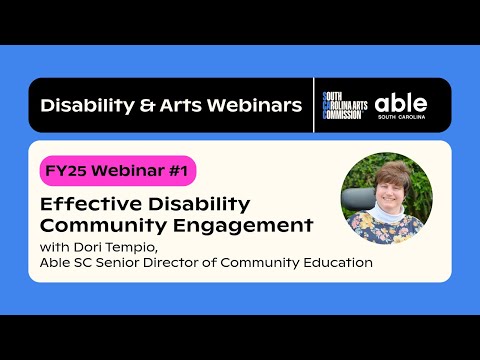
Amanda Noyes, arts and education accessibility director for the South Carolina Arts Commission, opened a webinar with ABLE South Carolina on improving access to arts programs, saying the agency’s mission is “to promote equitable access to the arts in South Carolina.”
Dori Tempeo, senior director of community education for ABLE South Carolina, framed accessibility as more than physical ramps and doors: “Accessibility is more than architectural or physical structural access,” she said, urging arts providers to make communications, schedules, food service and event design part of accessibility planning. Tempeo added that many accommodations are low-cost and that organizations should assign a contact person to handle requests in advance.
Why it matters: Tempeo told attendees that disability is a common and cross-cutting identity and that inclusive arts programming increases participation by artists and audience members who have historically been excluded. She cited prevalence figures shared in the webinar (about 61 million Americans and a high statewide share), and said organizations should use outreach, representation, and accessible materials to demonstrate welcome and encourage participation.
Practical checklist: Tempeo walked through actionable planning steps she said organizations should use when designing events: verify venue accessibility (including compliant restrooms and accessible stage access), plan transport and accessible parking, provide printed materials in accessible formats (Braille, large print or RTF), caption recorded and live video, and build accessibility into promotional materials and registration. She recommended assigning a named staff contact with phone and email for accommodation requests and confirming accommodations before events.
Accommodations and cost: Responding to concerns about price and capacity, Tempeo said many reasonable accommodations require little or no expense—simple changes like rearranging chairs, using lapel microphones, or sharing materials in advance can suffice—and that there are low-cost options (rental or borrowed adjustable podiums, music stands used as lecterns, or inexpensive assistive devices). She noted that for some larger items or events a budget line may be needed and encouraged organizations to pursue DEIA grant opportunities tied to accessibility.
Service animals and legal limits: On service animals, Tempeo summarized Department of Justice guidance: event staff may ask only whether an animal is a service animal and what tasks it performs; staff cannot demand certification or demonstration. She emphasized that emotional-support animals do not have the same public-access rights under DOJ rules and that event staff should still provide goods and services to the person if a service animal must be removed for bona fide safety or behavior concerns.
Staff training and presenter accommodations: Tempeo urged pre-event staff and volunteer orientations on accessibility roles, evacuation procedures for attendees who cannot use stairs, and etiquette for interacting with people with disabilities. For presenters who use accommodations she advised asking preferences (e.g., lapel vs. handheld mic), ensuring accessible podium height or stage ramps, and arranging panel seating so wheelchair-using presenters are not visually separated from other panelists.
Next steps and resources: The presenters said the slide deck and resources (including a short video from Rooted and Right on microphone accessibility) will be posted on the Arts Commission website. They asked attendees to complete a short survey for funders and invited participation in the remainder of the webinar series on organizational accessibility, digital regulations, youth inclusion and assistive technology.
The webinar closed with attendees encouraged to contact ABLE South Carolina and the Arts Commission for technical assistance and to adopt the checklists into grant proposals and event planning.