Get Full Government Meeting Transcripts, Videos, & Alerts Forever!
Get email alerts on the Identity Theft topic
No spam. Unsubscribe anytime.
South Carolina Department of Consumer Affairs offers parents step-by-step guidance on preventing and responding to child identity theft
Summary
The South Carolina Department of Consumer Affairs webinar explained how child identity theft occurs, common warning signs (including IRS notices), how to request a minor—s credit report from each major bureau, steps to place fraud alerts or a protected consumer freeze, and prevention tips for families.
Scott Cook, communications director at the South Carolina Department of Consumer Affairs, used a webinar to walk parents and guardians through how child identity theft happens and what steps to take if they suspect a minor—s personal data has been used fraudulently.
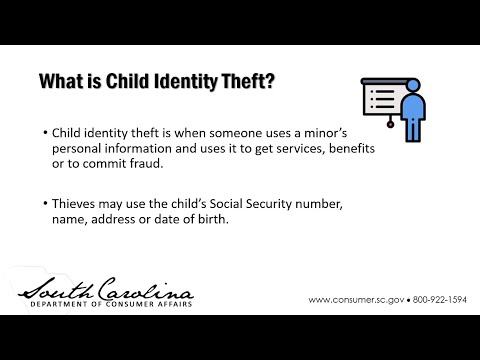
Cook said child identity theft often goes undetected for years because "most people are not actively looking to see if there are things on the child's credit report" and described common misuses of a child—s Social Security number, name, date of birth and address to obtain government benefits, health coverage, bank accounts, credit cards, loans or utility services.
The department advised several concrete warning signs that should prompt immediate action. Cook highlighted that an IRS notice claiming a child failed to pay taxes or that a Social Security number was used on another return is a strong indicator of identity theft. He also noted that collection notices, preapproved credit offers and denials of government benefits or student aid may surface fraudulent activity tied to a minor's identity.
To check for misuse, Cook said parents must contact each of the three major credit reporting agencies—Experian, Equifax and TransUnion—and request a manual search of the minor—s file. "You're gonna have to contact each of the 3 major credit bureaus, Experian, Equifax, TransUnion," he said, and be prepared to provide documentation proving parent or guardian status (driver's license or government ID, proof of address), plus the child's birth certificate and Social Security card. The bureaus have different procedures; some allow online forms, others require mailed copies of documents.
If fraudulent accounts appear, Cook recommended contacting each company listed on the report for written confirmation that the child is not responsible and then asking each credit bureau to remove the fraudulent entries. He also recommended placing a child fraud alert (free) with one credit bureau—which initially lasts 90 days and can be extended—and considering a protected consumer freeze for minors. "With this case, you're gonna have to contact all 3 of the major credit reporting agencies," Cook said of the freeze; he added bureaus typically have about 15 days after receiving notice to place a freeze.
Cook walked through related steps: file an identity theft report with the Federal Trade Commission and complete the FTC identity theft affidavit; for medical- or tax-related fraud, file a local police report and retain copies for disputes with creditors. He also explained that replacing a child—s Social Security number is unusual and generally considered only when a child is being abused, harassed or the number was used illegally; that process requires proving the theft and the child's age, identity and lawful status to the Social Security Administration.
The webinar emphasized prevention: ask why a full Social Security number is needed and whether an alternative (for example, last four digits) can be used; store original documents in a secure place and shred unneeded paperwork; avoid carrying Social Security cards; use strong, unique passwords and up-to-date antivirus software; and talk with children about what not to share online or in public to reduce phishing and oversharing risks. Cook encouraged parents to re-run a minor's credit report before age 16 as a precaution and noted that by 18 many young people begin building credit, which can require lifting any freeze placed earlier.
The Department of Consumer Affairs provided downloadable slides and cheat-sheet documents accompanying the webinar with links, forms and addresses for the bureaus, the FTC identity theft report, and instructions for protected consumer freeze requests. The presentation closed with an invitation to future Wednesday webinars hosted by the department.