Get Full Government Meeting Transcripts, Videos, & Alerts Forever!
Get email alerts on the Professional Development topic
No spam. Unsubscribe anytime.
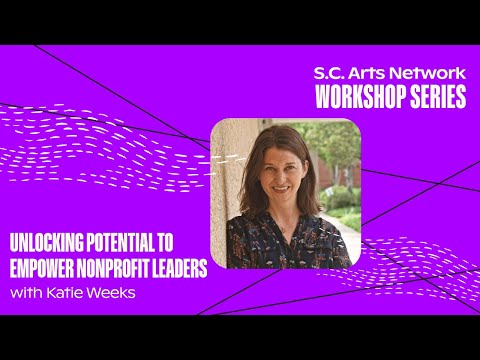
Katie Weeks leads arts-sector workshop on Positive Intelligence for nonprofit leaders
Summary
Katie Weeks, senior adviser at Armstrong McGuire, led a virtual workshop on Positive Intelligence (PQ) for nonprofit and arts-sector leaders, introducing saboteurs, Sage powers, short PQ reps, two online assessments, and an 8-week pod offering; the session was recorded and will be posted online.
Katie Weeks, senior adviser at Armstrong McGuire, led a virtual workshop on “Unlocking Potential to Empower Nonprofit Leaders,” telling arts-sector participants that Positive Intelligence (PQ) is a form of "mental fitness" that can improve work performance, wellbeing and relationships.
Weeks opened by inviting brief participant introductions and framed PQ as a research-informed program drawing on positive psychology, neuroscience and performance science. She said the approach was developed and summarized by Shirzad Chamine and has been used by hundreds of teams and thousands of individuals internationally.
The central PQ model Weeks taught divides mental responses into three parts: Saboteurs (self-critical and fear-driven patterns), the Sage (right-brain qualities such as empathy, curiosity and creativity) and Self-Command (practices that allow a person to shift from saboteur to Sage). "Positive intelligence is really mental fitness," Weeks said, and participants discussed how self-judgment commonly undermines creative work in nonprofit settings.
Weeks listed common saboteurs—starting with the Judge (judge of self, judge of others, judge of situation)—and nine accomplice saboteurs including the controller, hyperachiever, stickler, pleaser and hyper-rational. She described two online assessments: one that yields a baseline PQ score and a second that ranks an individual's top saboteurs so they can prioritize which patterns to address.
To demonstrate a short practice, Weeks led participants in a guided PQ-rep exercise focused on touch and breath: "Take two fingers and rub them together... focus on the sensation... take a breath and feel the temperature of the air as it comes into your nostril and the temperature of the air as it goes out." She said PQ reps can be as brief as 10 seconds or practiced for a couple of minutes and used throughout the day to shift attention away from saboteur responses.
Weeks encouraged small, sustainable steps—"start with small weights"—and described running 8-week PQ pods with arts participants, which she said led to measurable changes in thoughts and choice-making for some participants. She invited attendees to take the online assessments, offered 30-minute follow-up consultations, and noted an 8-week arts pod scheduled for October.
A moderator said the session was recorded and would be posted to the organization’s YouTube page; attendees were also told about available "arts project support" funding to apply for professional-development assistance. The session closed with Weeks’ exhortation to be kind to oneself and reminders about applying brief PQ practices in daily work.
What’s next: the recording will be posted and participants who want deeper work were invited to sign up for the 8-week pod or one-on-one follow-ups with Weeks. No formal actions, votes or policy decisions were taken during the session.