Get Full Government Meeting Transcripts, Videos, & Alerts Forever!
Get email alerts on the Succession Planning topic
No spam. Unsubscribe anytime.
Workshop urges nonprofit boards to formalize succession plans to avoid costly leadership failures
Summary
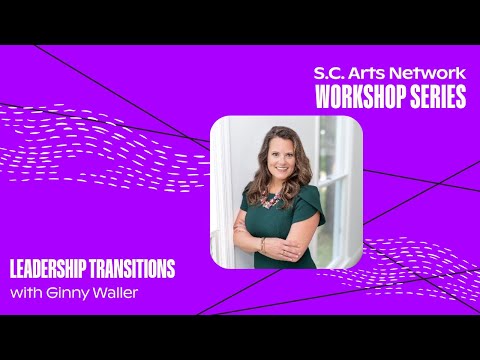
At a South Carolina Arts Network workshop, presenter Jenny Waller urged arts and nonprofit boards to write and rehearse succession plans, citing BoardSource and Chronicle of Philanthropy data showing low formal planning and high upcoming turnover; she offered concrete steps for interim leadership, onboarding and stakeholder communication.
Jenny Waller, a former nonprofit executive and interim director, told attendees at a virtual South Carolina Arts Network workshop that many organizations leave themselves exposed by failing to formalize leadership succession.
"If you were hit by the Mac bus," Waller said, using a colloquial image to emphasize sudden loss of leadership, "all of that beautiful succession planning you have in your head goes out the window." She urged boards to convert informal understandings into written plans and rehearsed procedures.
Waller framed the issue with national data: only about 29% of nonprofits report having a written succession plan, she said, and post-pandemic surveys show large numbers of leaders planning to leave their posts in the coming years. Those trends, she warned, increase the odds that transitions will be unprepared and costly.
Why transitions fail, Waller said, is often not primarily the new leader’s shortcomings but organizational failures to onboard and to prepare the staff and board. She cited research indicating inadequate onboarding and unclear expectations as leading causes and recommended four core components for a successful transition: establish interim leadership, involve the team, manage operational and legal obligations, and deploy a clear communication plan for staff and external stakeholders.
Waller walked through practical steps for boards and executives. She recommended creating a written manual that lists key duties, credentials and access (systems passwords, keys and stakeholder contacts), identifying internal talent via HR analytics and assessments, and investing in professional development and mentoring so potential successors have credentials and relationships when a vacancy occurs. She also recommended annual revision of succession documents and piloting the plan with scenario exercises.
On the financial side, Waller emphasized that even well-managed transitions carry direct costs (recruiting, advertising, relocation) and that failed transitions can be significantly more expensive to remediate. She recommended measuring transition success with immediate and follow-up staff culture and capacity surveys and by tracking retention and performance metrics.
Throughout the session Waller encouraged boards to include diversity and inclusion in succession plans so underrepresented candidates are present in pipelines and to involve 10–12 key stakeholders in interviews or surveys to clarify the community’s priorities for new leadership.
Waller closed by sharing resources attendees could use—examples included the Blue Avocado planning tools and a board self-assessment—and asked participants to complete a feedback survey to inform future trainings.
The workshop was presented by the South Carolina Arts Network; Waller said she will share templates and training materials on request.