Get Full Government Meeting Transcripts, Videos, & Alerts Forever!
Get email alerts on the Traffic Safety topic
No spam. Unsubscribe anytime.
Council orders staff to study speed-bump policy after residents raise safety concerns on 20 Second Street
Summary
After public reports of dangerous speeding, council directed staff to explore ordinance changes, community outreach and targeted enforcement for 20 Second Street and other problem corridors, with no final decision to install speed bumps.
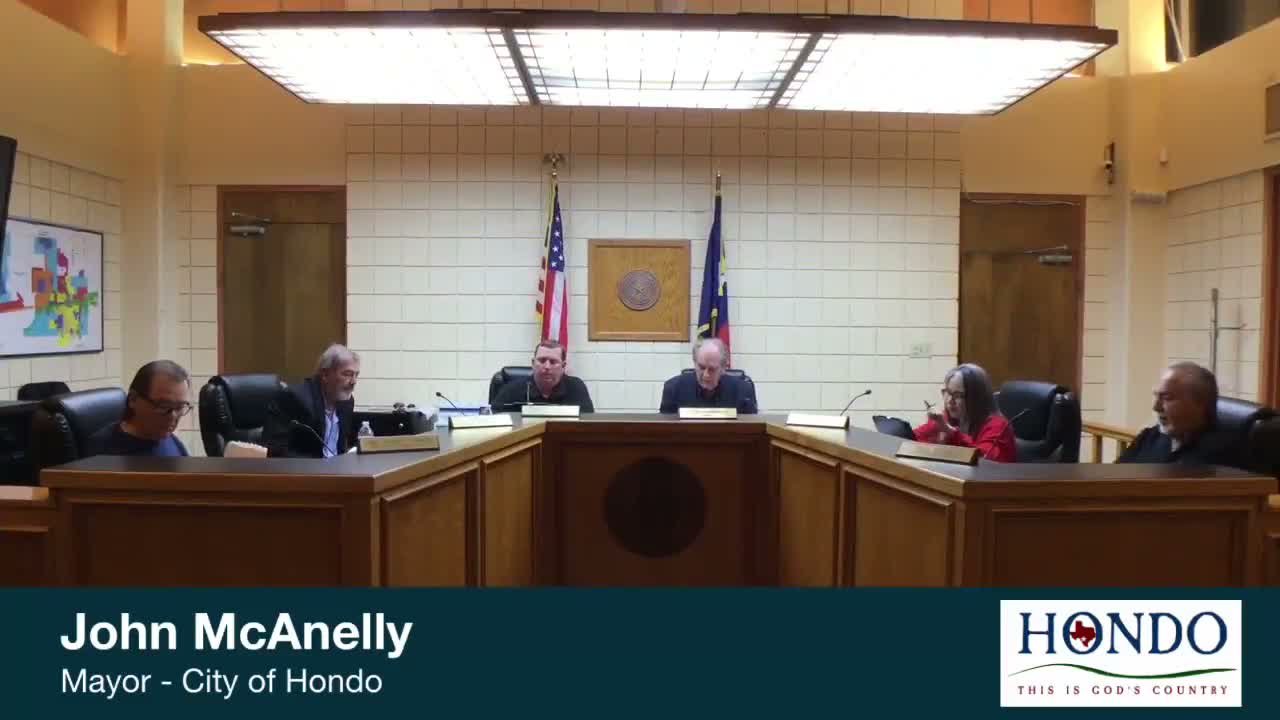
Hondo, Texas — Residents asked the City Council Jan. 27 to consider speed bumps on 20 Second Street after recorded high speeds near a residential area and St. John’s Catholic Church. Council directed staff to gather data, hold community input sessions and explore ordinance changes rather than immediately installing speed bumps.
Public safety staff reported a traffic study that recorded a one-time excess speed of 68 mph on 20 Second Street during the study period; staff noted the speed-counting equipment also demonstrated frequent high speeds at other locations such as Fourteenth and Fifteenth streets. City staff described the process for installing speed bumps as nontrivial, including ordinance requirements and cost-sharing provisions in current rules. "The process to get speed bumps…is not a simple process," the city manager said, advising outreach and a town-hall approach.
Council members debated enforcement versus physical traffic-calming measures. Some members urged more patrols and ticketing for repeat offenders; others favored targeted speed bumps near parks, schools and nursing homes. One councilmember said speed bumps are "horrible" and recommended enforcement-first, while another stressed that strategically placed speed bumps slow drivers and protect vulnerable pedestrians.
Council gave staff direction to examine ordinance changes, conduct community outreach (including town halls), solicit resident feedback and return with recommendations and a plan for prioritized locations. No formal installation was approved at the meeting.
Next steps: staff will review the ordinance, collect additional traffic data, hold community meetings and propose prioritized locations for any future traffic-calming installations.