Get Full Government Meeting Transcripts, Videos, & Alerts Forever!
Get email alerts on the School And Municipal Finance topic
No spam. Unsubscribe anytime.
Portland and GPISD officials warn of fiscal squeeze as sales tax dips and Chapter 3 13 payments wane
Summary
City finance staff reported a sudden drop in sales-tax receipts that forced a budget amendment and hiring freeze; school district leaders said revenue-protection ("Chapter 3 13") payments of $13.7 million this year mask a widening future 'recapture' risk that could send tens of millions to the state when abatements expire.
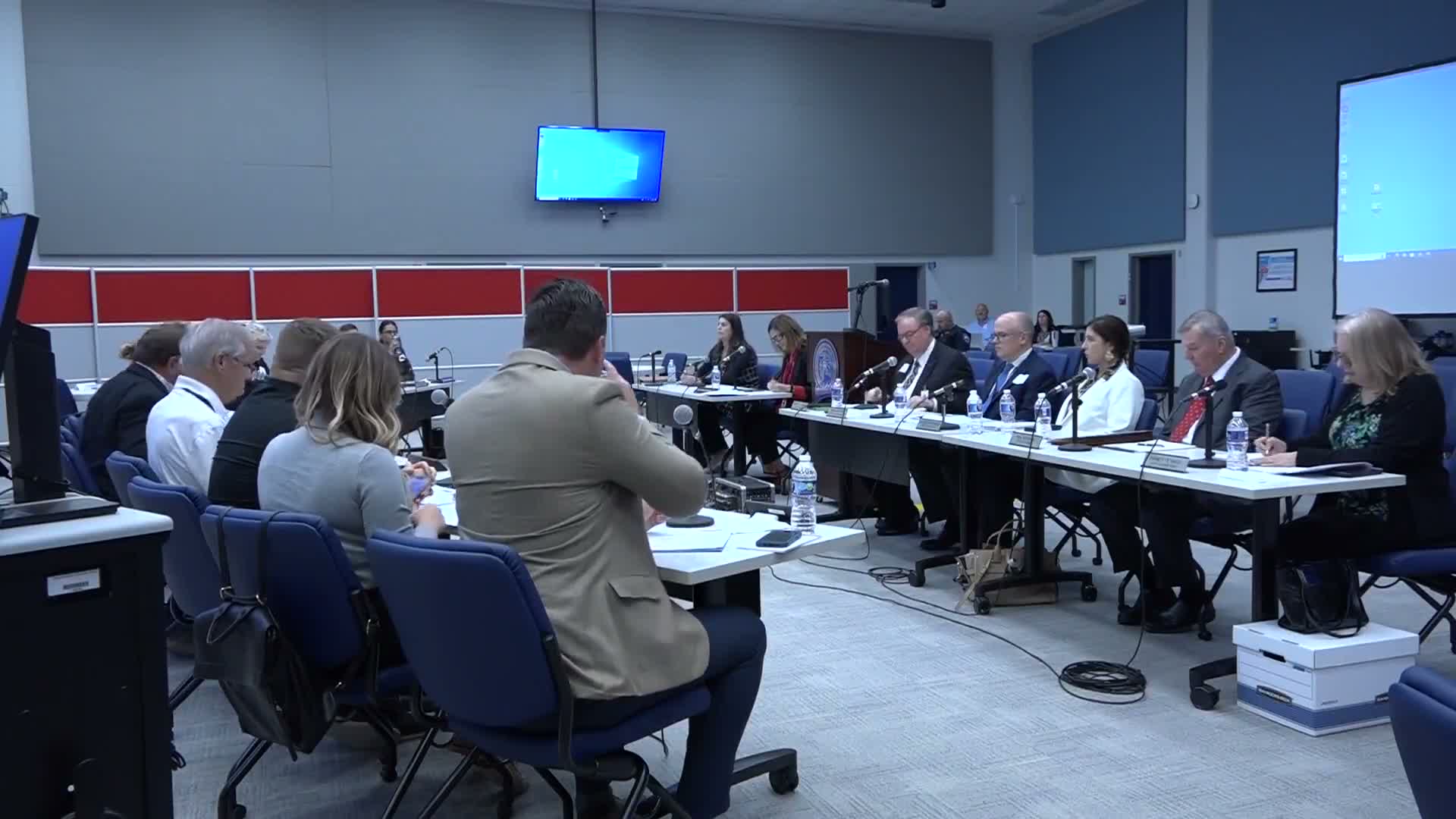
Portland city staff and Gregory-Portland Independent School District officials used a Nov. 4 joint meeting to lay out near- and long-term fiscal pressures for both governments, highlighting an unexplained shortfall in local sales taxes and the looming end of several industry tax-abatement payments that the district now relies on.
City finance director Brian Wright told the joint session the city’s budget depends primarily on property and sales taxes and that the city recently amended its budget and instituted a hiring freeze after sales-tax receipts “went flat, from the year before. And then the next month, they were lower than the year before.” He said staff reviewed confidential comptroller reports and saw a distributed drop among many commercial taxpayers but had not yet identified a single cause.
Wright explained Portland operates two broad fund types — a general governmental fund for police, fire and streets and enterprise funds such as water and wastewater supported by ratepayers — and noted limits on raising property-tax revenue under Texas’ 3.5% cap. He restated the city’s use of Certificates of Obligation (COs) as the typical financing tool for street and infrastructure projects, while warning that proposed state restrictions on COs could force more projects to go to voter-approved general-obligation bonds.
On the school side, GPISD finance staff framed a different but related exposure. Dr. Gonzales said the district expects $67 million in projected revenues and $66.26 million in appropriations this year, and that a $13.7 million revenue-protection payment (referred to repeatedly as a Chapter 3 13 payment) is currently supporting operations. “If we were in a situation where we weren't receiving 3 13 agreement payments this year, we would be running a $13,800,000 deficit,” Gonzales said.
District officials warned those Chapter 3 13 abatements — specifically naming Cheniere among the agreements — will begin expiring in the next two to three years. Staff projected recapture obligations could rise sharply and estimated the district could be sending “north of $50,000,000 a year back to the state” within 3–4 years if current conditions hold.
Board and council members asked staff about mitigation options. City staff said the de minimis rate and targeted use of sales-tax and enterprise funds are short-term tools; district staff said they are building internal measures to align expenses with expected revenue and have designated fund balance and litigation reserves to handle contested appraisals.
Both bodies emphasized the need to monitor receipts closely and consider joint strategies — from coordinated capital planning to exploring grant opportunities — to ease pressure on taxpayers. No formal financial actions were taken at the meeting; the joint session recessed into a workshop for strategic planning.