Get Full Government Meeting Transcripts, Videos, & Alerts Forever!
Get email alerts on the Intergovernmental Water Agreement topic
No spam. Unsubscribe anytime.
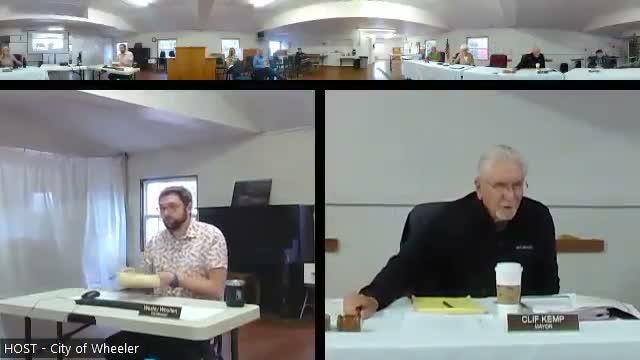
Wheeler council opens talks on water IGA with Manzanita, requests usage data and forms negotiation team
Summary
Wheeler council held a workshop to reassess its intergovernmental agreement (IGA) with Manzanita over a shared water system, citing ambiguous revenue-sharing language and changed water sourcing. Council assigned staff to compile historical usage figures and agreed to meet with Manzanita this fall.
Wheeler council members opened a workshop focused on the towns' intergovernmental water agreement and the effects of recent changes in Manzanitas water sourcing. The council said the IGA lacks a clear definition of "sharing" and that Manzanitas reduced use of Anderson Creek has shifted demand onto Wheeler's wells, creating financial strain for Wheeler residents.
"I'm gonna open the workshop, specifically regarding a water agreement with Wheeler of Manzanita," said the unidentified opening speaker, who framed the meeting as an effort to find a workable path forward without immediate legal action. Karen, who spoke early in the discussion, said the agreement "has changed" since it was written and "warrants a reassessment," and she noted that any negotiated revisions would require review by rural development.
Council members detailed several concerns: the IGA does not define how outside sales or equipment usage are apportioned between the two cities; Manzanitas move away from Anderson Creek surface water toward well sources altered historical usage patterns; and Wheeler lacks staff capacity to perform frequent on-site oversight of the shared system. One speaker cited a past analysis showing production costs near $20.84 per 1,000 gallons and said Wheeler had been subsidizing service for residents under prior arrangements.
Councilors agreed on a set of immediate steps. Bill and Phil were asked to obtain Anderson Creek historical data and usage figures; Dan Wessel or the city manager's office was asked to locate water-use records from 2002—2018; and staff were directed to photograph whiteboard notes from the workshop, circulate a synopsis to all council members, and prepare recommendations. The mayor (unidentified) proposed a small negotiating team to meet with Manzanita that would include Catherine, Lyle, Koslovski, Karen and the mayor; participants set a target of meeting by October and said they aim to have an agreed-upon path within roughly a year.
Council members emphasized that they prefer face-to-face negotiation to litigation. "I really don't want to explore getting into suing Manzanita," the unidentified speaker said, adding that the priority is an amicable, practical solution that secures revenue or credits for Wheeler while protecting local customers from rate shocks.
The council also discussed governance options, including reviving a multi-community water board with citizen representation to improve transparency and oversight. Speakers asked staff to clarify which Manzanita expenditures are tied to the shared distribution system and which are Manzanita-only costs, a distinction they said will matter for any revenue-sharing formula.
Next steps recorded at the workshop: collect historical Anderson Creek and consumption data; produce a concise synopsis and fact sheet for Wheeler residents explaining current rates and comparative figures; clarify the scope of shared-system expenditures; and convene the negotiation team to begin talks with Manzanita. The workshop closed with a commitment to distribute notes and proceed toward negotiation rather than immediate legal action.