Get Full Government Meeting Transcripts, Videos, & Alerts Forever!
Get email alerts on the Land Use Remediation topic
No spam. Unsubscribe anytime.
Stratford Zoning Commission adopts uniform conditions for six Point Stratford remediation projects, approves two amendments
Summary
On July 24, 2024, the Stratford Zoning Commission unanimously approved 17 conditions that will apply to six remediation and stockpiling petitions from Point Stratford Renewal LLC at 550 Main Street. Two amendments—flexible fence-height use and monthly public reporting—were added before each parcel received a 5–0 approval.
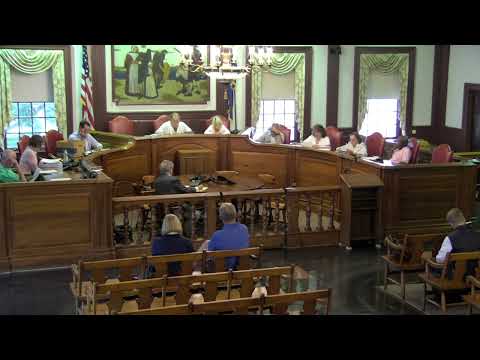
The Stratford Zoning Commission on July 24 unanimously adopted a single set of 17 conditions that will apply to six petitions from Point Stratford Renewal LLC seeking erosion- and sediment-control review, coastal site plan review, and related approvals for remediation, demolition and stockpiling at multiple parcels on Main Street. The commission approved two amendments before voting on each petition; all recorded votes were 5–0.
The adopted conditions require developers to follow the town engineer’s memos dated 06/14/2024 and 07/08/2024 and the health department memo dated 07/2024 and to obtain letters from those offices confirming that plan revisions address required recommendations prior to any site work or stockpiling. The commission also required strict adherence to 11 DEEP recommendations (memo dated 07/10/2024) and Harbor Waterfront Commission recommendations (memo dated 07/10/2024).
Key technical limits and mitigations are included in the conditions: a maximum stockpile height of 21 feet; minimum setbacks for piles (a larger setback on the South parcel and a reduced setback on the North parcel as determined by the planning and zoning administrator); stabilization of stockpiles left more than 30 days (seed/mulch/hydroseed or equivalent); temporary linear sediment barriers before precipitation; daily mechanical sweeping of paved areas to control dust and fine materials; and containment and treatment of any water used for dust mitigation. An emergency action plan for hurricane or coastal storm events must be submitted and kept on file before committing any work.
Two amendments were adopted during the meeting. First, staff recommended and the commission approved a change to allow use of existing 6-, 8- or 10-foot fences with screening across most of the sites while preserving an 8–10-foot temporary fence requirement along the south parcel frontage on Main Street; the amendment passed by roll call vote, 5–0. Second, Chair Harold Watson’s proposed change to require corporate reporting on a publicly accessible website to occur monthly (instead of quarterly) was approved by roll call, 5–0.
The conditions also include non-technical operational requirements: signage and temporary screening to indicate adjacent businesses remain open during demolition, administrative approval of final signage/artwork by the office of economic and community development, and a requirement that a corporate representative meet with the mayor or her designee to discuss trucking-route impacts and potential partnership for roadway upkeep. Condition 14 further requires daily air-quality monitoring throughout demolition, remediation, and fill operations with immediate responses to concerns. Condition 17 requires submission of a packet of exhibits to the zoning enforcement officer demonstrating how all applicable conditions have been satisfied prior to the commencement of approved work.
After adopting the conditions and amendments, the commission read the petitions for each affected parcel at 550 Main Street (various MBL identifiers) and moved to approve each petition with the conditions as amended. Each recorded vote on the individual petitions was unanimous (5–0).
Commissioners discussed larger reuse questions during deliberations. Several commissioners noted the current federal deed restrictions and FEMA flood-zone designations for the property, and they said those constraints make long-term residential use unlikely without substantial elevation or other major remediation; the commission emphasized that the current approvals address remediation activities only and do not amount to approval of specific future development. Staff cautioned commissioners about expressing firm preferences on future projects to avoid any perception of predetermination for subsequent applications.
Planning and Zoning Administrator Jay Avansky told the commission that most of the upcoming zoning regulation changes are clarifying or organizational language (about 90 percent) and that roughly 10 percent are substantive changes; the commission and staff plan an administrative session on August 14 for a closer review and a public open house/workshop on September 11 at the Baldwin Center.
Next procedural steps: applicants must submit revised plans that address all listed recommendations and secure letters from the town engineer and health department confirming compliance before any work begins; applicants must also submit the exhibits packet required by Condition 17 for administrative approval. The commission approved the minutes (with a spelling correction) and adjourned the meeting.
Actions recorded: the commission adopted the 17 conditions (as amended) that will govern remediation and stockpiling at the six petitions; it approved a fence-height amendment allowing 6/8/10-foot use with an 8–10-foot minimum on the south frontage; it changed corporate reporting from quarterly to monthly; it approved each of the six petitions from Point Stratford Renewal LLC by unanimous vote, and it approved minutes with a spelling correction. No dissenting votes were recorded.
The commission’s decisions are procedural approvals tied to the conditions described above and require follow-up submittals and confirmation letters from town staff and external reviewing agencies before any onsite work begins.